
Strategic Strikes: The Battle for the Sea of Azov and Beyond
The conflict between Kyiv and Moscow has entered a volatile new phase, with a sharp increase in targeted strikes against Russia’s critical energy infrastructure. Most recently, reports have emerged of a drone attack within the Sea of Azov and the Black Sea maritime canal, highlighting the strategic importance of these waterways.
According to Yuri Slyusar, the governor of Russia’s Rostov region, a tanker was damaged during a precision drone operation in the Azov-Black Sea canal. While officials stated the tanker was empty—limiting the risk of an environmental disaster or oil spill—the strike sends a clear message about Ukraine’s ability to disrupt maritime logistics in the Sea of Azov.
Hitting the Heart of Russia’s Oil Industry
The maritime tensions are mirrored by devastating attacks deep within Russian territory. In the Samara region, the Syzran Oil Refinery—operated by the energy giant Rosneft—became a primary target. The strike resulted in plumes of black smoke visible for kilometers and caused significant damage to both the industrial site and surrounding residential buildings.
Local officials, including Governor Vyacheslav Fedorishchev, confirmed that the attack left one person dead and several others injured, including a child. This refinery is located approximately 800 kilometres east of the border, proving that Kyiv’s reach is expanding.
The Ripple Effect: Fuel Crisis and “Long-Range Sanctions”
These coordinated strikes are not random. Ukrainian President Volodymyr Zelenskyy has framed these operations as a form of “long-range sanctions,” intended to pressure Moscow into halting its four-year invasion. The impact is already being felt across Russia:
- n
- Fuel Shortages: Widespread gasoline shortages have been reported in multiple regions.
- Rationing: Motorists are facing hours of wait times to fill their tanks.
- Economic Strain: The degradation of refining capacity is creating an internal energy crisis.
Russia’s Retaliation and the Humanitarian Toll
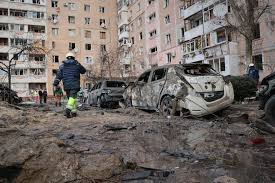
In response to the volatility in the Sea of Azov and the refinery strikes, Moscow has intensified its bombardment of Ukrainian urban centres. The Russian Ministry of Defense recently claimed attacks on the vital ports of Odesa and Chornomorsk, aiming to stifle Ukraine’s own maritime trade and export capabilities.
As the war evolves, the focus on energy and maritime corridors continues to escalate, leaving both nations in a high-stakes game of attrition. For real-time updates on the geopolitical situation, you can follow the Associated Press coverage of the war in Ukraine.



