
Super El Niño 2026: Why the World Should Be on High Alert
The global climate landscape is bracing for a significant upheaval. The National Oceanic and Atmospheric Administration (NOAA) has recently increased the probability to a staggering 95% that a “Super El Niño” will reach intense levels in the Pacific Ocean during the final quarter of 2026. This isn’t just a meteorological curiosity; it is a warning signal for global food security and economic stability.
The Science Behind the Surge: Breaking Records
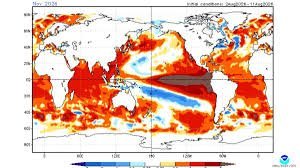
After months of monitoring accelerated oceanic warming, NOAA reports that the probability of a very strong event has jumped by 14 percentage points since July. The technical trigger for a “Super El Niño” is a sustained sea surface temperature (SST) anomaly of 2°C or higher in the equatorial Pacific.
Current data is alarming. In the first week of August, the Niño 3.4 region already reached an anomaly of +1.8°C. To put this into perspective, the historic Super El Niño of 1997-98 didn’t cross this threshold until late August. This accelerated warming suggests that the 2026 event could be one of the fastest-developing climate anomalies in recent history.
Global Agricultural Impacts and Market Volatility
Latin America, a powerhouse for global exports, stands at the epicenter of this risk. A strong El Niño typically disrupts rainfall patterns, leading to a dangerous duality: excessive flooding in some regions and severe droughts in others.
The primary concerns revolve around the 2026/27 agricultural campaign, specifically affecting key commodities such as:
- n
- Soybeans and Corn: Shifts in planting dates and potential yield drops.
- Coffee and Sugar: High sensitivity to irregular precipitation.
- Meats and Fruits: Impact on livestock grazing and orchard productivity.
According to NOAA, these disruptions can ripple through global supply chains, affecting everything from rural road logistics to international commodity prices.
Regional Spotlight: The Case of Argentina
The effects are already manifesting in South America. Argentina is seeing a stark contrast in weather extremes: the Patagonia region has faced unusual snowfall and prolonged cold waves, while the northeast—including provinces like Misiones, Corrientes, and Buenos Aires—is bracing for intense rains and high river levels.
Adapting to a More Volatile Climate
The 2026 episode is distinct because it occurs within a generally warmer and more humid atmosphere, which amplifies the frequency of extreme weather events. To mitigate these risks, experts suggest a shift toward climate-resilient strategies:
- Digital Agriculture: Utilizing AI and real-time data for precision planting.
- Climate Insurance: Implementing flexible financial buffers to protect farmers.
- Infrastructure Reinforcement: Preparing urban and rural drainage systems for extreme rainfall.
While uncertainty remains regarding the absolute peak of the warming, the priority is clear: transforming raw climate data into actionable strategies to protect production and infrastructure across the Americas.



