
Embracing the Light: Everything You Need to Know About the 2026 Summer Solstice
As we approach the peak of the season, the Summer Solstice stands as one of the most fascinating astronomical events of the year. In 2026, this celestial milestone will occur on Sunday, June 21. But while we often think of it simply as the “longest day of the year,” the reality is a bit more complex—especially for those of us living in Canada.
The Science Behind the Solstice: Why Does it Happen?
The term “solstice” originates from the Latin word solstitium, which literally translates to “Sun stoppage.” This refers to the moment the Sun appears to pause its northward migration and begin its journey back toward the south.
This phenomenon isn’t caused by the Sun moving, but by the Earth itself. Our planet is tilted on its axis at an angle of approximately 23.4 degrees relative to its orbit around the Sun. Because of this tilt, different hemispheres lean toward the Sun at different times of the year.
- n
- June Solstice: The Northern Hemisphere is tilted most directly toward the Sun, resulting in the highest solar path and the maximum amount of daylight.
- December Solstice: The opposite occurs, as the Northern Hemisphere tilts away, leading to the shortest day and longest night.
The Canadian Twist: When is the Longest Day in 2026?
For most of the world, the solstice is a single moment in time. In 2026, the precise astronomical event occurs at 8:25 UTC on June 21. However, across the vast landscape of Canada, the “longest day” isn’t uniform. Because the change in daylight duration is so minuscule near the solstice, some regions experience a tie.
Two Longest Days (June 20 & 21):
In many communities, the difference between the 20th and 21st is a mere fraction of a second. If you live in these cities, you effectively get two longest days of the year:
- Atlantic Canada: Sydney, N.S., and Moncton, N.B.
- Quebec: Montreal and Granby.
- Ontario: Ottawa, Hamilton, Kitchener, London, Sault Ste Marie, and Thunder Bay.
- The West: Calgary, Gimli, Flin Flon, and most of British Columbia.
The June 20 Outliers:
Strangely, in parts of northern B.C., as well as Whitehorse and Dawson City in the Yukon, June 20 actually stands alone as the absolute longest day of the year!
Capturing the Sun: The Art of Solargraphy
While we usually take photos in milliseconds, some artists capture the Sun over months. Solargraphy uses a pinhole camera and photographic paper to track the Sun’s path across the sky. By leaving a camera exposed from the summer solstice to the winter solstice, photographers like Bret Culp create stunning visual records of the Earth’s orbit, where cloudy days appear as gaps in the luminous solar curves.
How the World Celebrates the Peak of Summer
Humans have aligned their architecture and rituals with the solstice for millennia. From the pyramids of Chichén Itzá in Mexico to the Temple of Karnak in Egypt, the solstice has always been a time of reflection and celebration.
1. Stonehenge, England
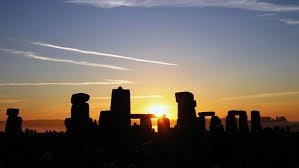
Every June, crowds gather at Stonehenge to witness the sunrise align perfectly with the “Heel Stone.” For many, it’s a way to tune back into the natural cycles of the Earth.
2. Midsummer in Sweden
In Sweden, Midsummer is almost as significant as Christmas. It’s a time of dancing around maypoles and celebrating the abundance of nature during the brightest nights of the year.
3. The Midnight Sun Game, Alaska
In Fairbanks, Alaska, they take the “longest day” literally. Since 1906, the Midnight Sun Game has seen baseball players take the field at 10 p.m. and play well past midnight—all without a single artificial stadium light, relying entirely on the natural glow of the Arctic summer.
Final Thoughts
Whether you’re tracking the precise minute of the solstice in your Canadian city or simply enjoying the extra hours of sunlight for a backyard BBQ, the Summer Solstice reminds us of our profound connection to the cosmos. Mark your calendars for June 2026 and get ready to soak up every last drop of light!



