
Storm Shadow and Beyond: Europe Unites to Build a Massive Ballistic Missile Defence Shield
In a decisive move to reshape the security architecture of the continent, Ukraine and nine allied nations—including the United Kingdom, Germany, and France—have announced a landmark initiative. Their goal? To develop a shared ballistic missile defence programme designed to neutralize the escalating threats posed by Russian aggression.
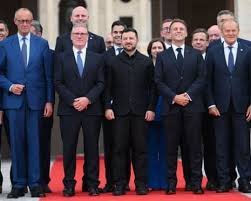
The announcement came during high-stakes talks in Paris, where President Volodymyr Zelenskyy met with European leaders to accelerate the deployment of air defences before the harsh winter months, a period when Russia typically intensifies its strikes on critical infrastructure.
A Unified Front Against Ballistic Threats
While cruise missiles and the highly effective Storm Shadow have been pivotal in Ukraine’s strategic strikes, ballistic missiles present a far more complex challenge due to their speed and trajectory. The new coalition—which also includes Denmark, Italy, the Netherlands, Sweden, Norway, and Spain—aims to create an integrated architecture to deter these advanced threats.
The partnership is built on a unique foundation: Ukraine’s real-world experience. Having faced a full-scale invasion for over four years, Kyiv provides invaluable combat data that will inform the design and deployment of this European shield.
Key Pillars of the New Defence Strategy:
- Integrated Architecture: A seamless network of sensors and interceptors to detect and neutralize missiles.
- Shared Intelligence: Leveraging Ukrainian battlefield experience to optimize response times.
- Collective Deterrence: Sending a clear signal to Moscow that Europe is prepared for long-term stability.
Bridging the Gap: The UK and EU Synergy
In a significant geopolitical shift, the United Kingdom has signed on to participate in the European Union’s €90 billion support loan for Ukraine. This agreement allows British defence firms to secure contracts to provide weapons, funded by the loan, effectively strengthening the military-industrial link between London and Brussels post-Brexit.
British Prime Minister Keir Starmer emphasized that this move is a win-win for security and the economy:
“This agreement will help ensure Ukraine gets the support it needs to defend itself against Russian aggression, while backing British defence companies, supporting skilled jobs and strengthening our national security.”
The Fight Against Fragmentation
Despite the progress, French President Emmanuel Macron issued a stern warning against “nationalism” in defence procurement. Following the collapse of a joint Franco-German fighter jet project, Macron urged European nations to avoid “go-it-alone” policies.
He argued that fragmentation only leads to delays and inefficiency, stating that while patriotism is vital, nationalism in defence risks undermining the entire continent’s ability to rearm effectively. To prove their readiness, the Multinational Force for Ukraine will begin exercises in neighbouring countries soon to validate deployment plans in the event of a ceasefire.
Looking Ahead: The Strategic Impact
With an initial €6 billion from the EU loan already being directed toward drone production, the tide of the war is shifting. The integration of advanced systems—from the precision of the Storm Shadow to the upcoming ballistic shield—marks a new era of European military cooperation. As winter approaches, the speed of these deployments will be critical in safeguarding millions of lives and ensuring the sovereignty of Ukraine.
For more detailed information on European security policies, visit the Official European Union portal.



