
Seabed Mining vs. Marine Life: The High-Stakes Battle for Virginia’s Coast
Imagine a landscape of crystalline blue-green waters, where barrier islands stand as silent guardians and thriving salt marshes breathe life into the Atlantic coast. This is the Eastern Shore of Virginia—a pristine ecological treasure and home to the largest seagrass restoration project on the planet. However, this sanctuary is now facing a looming threat: seabed mining.
The Bureau of Ocean Energy Management (BOEM) has recently issued a Request for Information (RFI), sparking a heated debate over whether the industrial extraction of minerals from the ocean floor is worth the potential ecological collapse of one of the East Coast’s last coastal wildernesses.
What is Seabed Mining and Why Virginia?
Seabed mining involves the extraction of critical mineral resources from the deep ocean floor. In this specific case, the proposed mining area spans over 2,000 square miles, ranging from 3 to 63 miles offshore. Companies like Odyssey Marine Exploration are eyeing the region for “heavy mineral sands,” which are rich in:
- n
- Titanium and Zirconium: Essential for industrial manufacturing.
- Rare Earth Elements: Critical components for magnets and high-tech batteries.
- Phosphorites: Key ingredients for whitening agents in paint and glass.
While these minerals are vital for the global transition to green technology, the cost of obtaining them may be far higher than the market price.
An Ecological Treasure Under Threat
The The Nature Conservancy, through the Volgenau Virginia Coast Reserve, manages 40,000 acres and 14 barrier islands. This region is more than just a scenic view; it is a biological engine.
The “Fish Factories” and Carbon Sinks
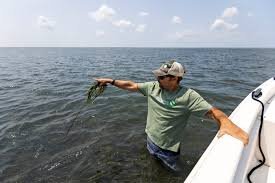
Coastal marine habitats scientist Bo Lusk describes the region’s seagrass meadows as a “giant Tums” for the bay. These meadows buffer against ocean acidity, allowing clams, oysters, and scallops to grow stronger shells. Even more impressively, these seagrasses can store more carbon per acre than some terrestrial forests, making them a critical tool in the fight against climate change.
A Sanctuary for Migratory Species
The proposed seabed exploration area overlaps with the Mid-Atlantic Bight, a vital highway for:
- n
- Marine Mammals: Including the endangered North Atlantic right whale, humpback whales, and dolphins.
- Avian Life: The islands serve as crucial nesting grounds for piping plovers and terns, as well as “jumping-off points” for birds migrating to South America.
The Environmental Alarm: Sediment Plumes and Destruction
Environmental groups, including the Southern Environmental Law Center and UNESCO-recognized site protectors, are sounding the alarm. Deep-sea ecologist Andrew Thaler warns that the dredging process—which uses massive suction pipes to liquidize the sand—literally destroys any ecosystem it touches.
The most significant danger is the creation of sediment plumes. These clouds of suspended debris can travel hundreds of miles, causing catastrophic damage by:
- Clogging and eroding fish gills.
- Smothering fish eggs and destroying spawning grounds.
- Blocking sunlight from reaching seagrass, effectively killing the “carbon sinks.”
- Releasing heavy metals into the water column, risking the health of the entire food chain.
The Economic Clash: Industry vs. Local Heritage
While some industrial entities, like The Spaceport Company, argue for opening the Atlantic to new industrial opportunities, local communities are in fierce opposition. The Accomack and Northampton County Boards of Supervisors have cited “unacceptable risks” to the local economy, which relies heavily on commercial fishing, aquaculture, and tourism.
For the watermen of the Eastern Shore, the seabed is not a resource to be mined, but a foundation for their livelihood. The potential destruction of clam and oyster beds could lead to an economic downturn that no amount of mineral wealth could offset.
What Happens Next?
The BOEM is currently gauging public and industry interest. While a final decision to lease the land has not been made, the environmental impact assessment will be the next critical step. Experts warn that the effects of such mining could extend far beyond Virginia, impacting water quality in Maryland, Delaware, and North Carolina.
The battle for the Eastern Shore is a reminder of the delicate balance between industrial progress and planetary preservation. When it comes to the seabed, once the damage is done, there is no turning back.



