
Understanding the San Andreas Fault Stress Level: The Science of Pressure
For residents of California and geology enthusiasts worldwide, the phrase “San Andreas Fault stress level” often sparks a mix of curiosity and anxiety. But what does “stress” actually mean in a geological context, and why is it the primary indicator for future seismic events?
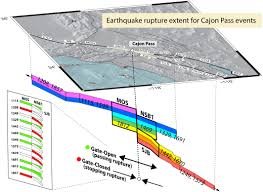
At its core, the San Andreas Fault is a transform boundary where the Pacific Plate and the North American Plate slide past each other. However, they don’t slide smoothly. Due to friction, the plates often become “locked,” meaning they are trying to move but are stuck. This is where seismic stress begins to accumulate.
How Does Stress Accumulate in a Fault Line?
Imagine stretching a thick rubber band. The more you pull, the more energy is stored within the material. The San Andreas Fault operates similarly through a process known as the elastic rebound theory. As the plates push against each other, the surrounding rocks deform and store elastic energy.
- Locked Sections: Areas where the plates are completely stuck and stress is building rapidly.
- Creeping Sections: Areas where the plates slide slowly and continuously, releasing stress in small, non-destructive increments.
- Rupture Point: The moment when the accumulated stress exceeds the strength of the rock, resulting in a sudden slip—an earthquake.
Monitoring the Danger: How Scientists Measure Stress
Geologists and seismologists don’t have a simple “stress meter,” but they use a combination of high-tech tools to estimate the risk. By utilizing USGS (United States Geological Survey) data, researchers monitor:
- GPS Displacement: High-precision GPS stations track how the land is moving (or not moving) in real-time.
- Paleoseismology: Studying ancient soil layers to determine the historical frequency of “The Big One.”
- Seismic Tomography: Using seismic waves to create 3D images of the Earth’s crust to identify high-pressure zones.
Where is the Stress Level Highest?
Not all parts of the fault are equally dangerous. Current research suggests that the Southern San Andreas Fault is particularly concerning. While the northern section near San Francisco has seen significant activity in the past, some southern segments have been “quiet” for centuries, suggesting a massive amount of stored energy is waiting to be released.
Preparing for the Inevitable
While we cannot predict the exact second a fault will rupture, understanding the San Andreas Fault stress level allows cities to implement better building codes and emergency protocols. Whether it is a magnitude 6.0 or the feared 7.8+, preparation is the only defense.
To stay safe, experts recommend securing heavy furniture, preparing an emergency kit, and having a family communication plan in place.
Final Thoughts
The earth is a living, shifting entity. While the buildup of stress along the San Andreas Fault is a natural geological process, staying informed through scientific data helps us coexist with the volatility of our planet.



