
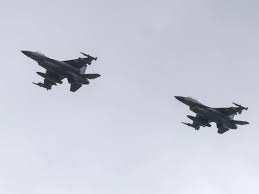
The Evolution of Russian Fighter Jets: Dominating the Skies
In the realm of modern aerial warfare, Russian fighter jets stand as symbols of engineering ambition and strategic power. From the Cold War era to the current generation of stealth aircraft, Russia has consistently pushed the boundaries of aerodynamics and propulsion to maintain air superiority. But what exactly makes these machines so formidable?
The Su-57: Russia’s Stealth Vanguard
The Sukhoi Su-57 represents the pinnacle of Russian aerospace technology. As a fifth-generation fighter, it is designed to challenge the dominance of Western stealth aircraft like the F-35 and F-22. The Su-57 focuses on a blend of low-observability (stealth) and extreme maneuverability.
- Stealth Capabilities: Advanced composite materials and a specialized shape to reduce radar cross-section.
- Supercruise: The ability to maintain supersonic speeds without utilizing afterburners, extending its operational range.
- Advanced Avionics: Integrated sensor fusion providing the pilot with a comprehensive view of the battlefield.
The Workhorses: Su-35 and MiG-31
While the Su-57 captures the headlines, the backbone of the Russian Air Force relies on highly capable multi-role and interceptor aircraft.
The Su-35S (Flanker-E)
The Su-35 is renowned for its thrust vectoring nozzles, allowing the pilot to perform maneuvers that seem to defy the laws of physics. It is a versatile beast, capable of air-to-air combat and precision ground strikes, making it a critical asset in any regional conflict.
The MiG-31 (Foxhound)
When it comes to sheer speed and altitude, the MiG-31 remains an undisputed king. Designed as a long-range interceptor, its primary role is to patrol vast borders and neutralize threats before they even enter sovereign airspace. Its ability to carry heavy long-range missiles makes it a terrifying deterrent.
Comparing Russian Engineering vs. Western Standards
A recurring debate in military aviation is the comparison between Russian and Western design philosophies. While the US emphasizes stealth and network-centric warfare, Russian fighter jets often prioritize raw power, agility, and ruggedness. This approach ensures that their aircraft can operate from less-than-ideal airfields while maintaining lethal combat efficacy.
To learn more about the global landscape of military aviation, you can explore the detailed archives at Wikipedia’s Russian Air Force page or keep up with the latest in aerospace engineering at Aviation Week.
Conclusion: The Future of the Skies
The trajectory of Russian fighter jets suggests a move toward further automation and the integration of unmanned wingmen. As technology evolves, the balance of power in the skies will continue to shift, driven by the relentless pursuit of speed, invisibility, and firepower.



