
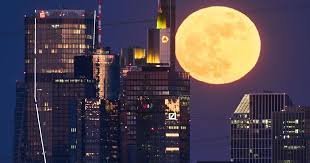
Prepare Your Telescopes: The Rare Blue Micromoon of May 2026 is Coming
Skywatchers, mark your calendars! A rare astronomical phenomenon is set to grace our night sky this weekend. The full moon May 2026 isn’t just any lunar phase—it is a blue micromoon, a sight so uncommon that we won’t see its like again until the very end of 2028.
But what exactly is a blue micromoon, and why should you be excited? Let’s dive into the science behind this mesmerizing event.
What is a Blue Micromoon?
To understand this event, we have to break down the two terms. First, a “Blue Moon” has nothing to do with color. In astronomical terms, it refers to the second full moon to occur within a single calendar month. Since the first full moon of May happened on the 1st, this upcoming event completes the pair.
The “Micromoon” part happens because the moon’s orbit isn’t a perfect circle. During this event, the moon reaches its farthest point from Earth (apogee). At a staggering distance of 252,360 miles, the moon will appear slightly smaller and dimmer than average—the exact opposite of a supermoon.
A Cosmic Dance with Antares
One of the most thrilling aspects of the full moon May 2026 is its proximity to Antares, a brilliant red supergiant star known as the “heart of the scorpion” in the constellation Scorpius.
- n
- In the Northern Hemisphere: Observers will see the moon and Antares sharing the sky in a stunning visual alignment.
- In the Southern Hemisphere: Residents of Argentina, Chile, New Zealand, and eastern Australia are in for a treat. They will witness an occultation, where the moon actually passes in front of Antares, momentarily obscuring the star from view.
How to Spot the Blue Micromoon
If you’re expecting a dramatic change in size, you might be disappointed. According to Gianluca Masi of the Virtual Telescope Project, the micromoon will be roughly 6% smaller and 10% dimmer than a standard full moon. These changes are subtle and may go unnoticed by the naked eye.
Pro Tips for Viewing:
- n
- Use Binoculars or a Telescope: To truly appreciate the moon’s distance and its interaction with Antares, optical aid is recommended.
- Find Dark Skies: Get away from city light pollution to see the subtle dimness of the micromoon.
- Watch Live: If you can’t get outside, the Virtual Telescope Project often streams live images captured by robotic telescopes.
Quick Facts: Blue Micromoon vs. Supermoon
| Feature | Blue Micromoon (May 2026) | Average Supermoon |
|---|---|---|
| Distance | ~252,360 miles | ~225,130 miles |
| Appearance | Smaller and Dimmer | Larger and Brighter |
Whether you are a seasoned astronomer or a casual stargazer, the full moon May 2026 is a reminder of the rhythmic and fascinating nature of our solar system. For more information on lunar cycles, check out the official NASA Moon Portal.



