
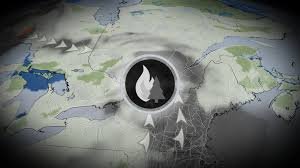
The Breath of Fresh Air Quebec and Ontario Needed
For many Canadians, the start of the construction holidays is a time for adventure and exploration. However, this year, thousands of Quebecers heading into the wild have found their views obscured by a persistent haze. Wildfire smoke has dominated the headlines and affected the lungs of residents across the province. But there is a silver lining: rain.
While air quality remains significantly reduced in parts of Ontario, the arrival of precipitation has begun to shift the tide, offering much-needed relief to affected regions.
How Rain Impacts Wildfire Smoke and Air Quality
Rain does more than just dampen the ground; it acts as a natural filtration system for our atmosphere. According to meteorologist Kevin Cloutier, recent precipitation in northwestern Ontario—where several active fires are located—has already started to clear the air.
Even when southern winds push smoke back into Quebec, rain helps capture fine particulate matter, pulling it out of the air and keeping pollution levels within a more reasonable range. This process is crucial for those sensitive to air pollution and for everyone hoping to enjoy the great outdoors.
Regional Updates: Where is the Air Clearing?
- Montreal and Montérégie: After a degraded Saturday, a noticeable improvement was seen by Sunday.
- Outaouais and Abitibi-Témiscamingue: These border regions are seeing a gradual return to clearer skies.
- Southern Quebec: While smoke remains, it is expected to stay at higher altitudes from Monday to Tuesday, resulting in lighter plumes at ground level.
SOPFEU Warning: Why the Fire Ban Remains
Despite the refreshing rain and a “Low to Moderate” fire index, the Société de protection des forêts contre le feu (SOPFEU), in coordination with the Ministry of Public Security, has maintained the ban on open-air fires in and around forests.
This decision is not just about the weather, but about the immense pressure on our emergency services. The scale of the fires in northwestern Quebec has required an international effort, with reinforcements arriving from:
- Alberta and British Columbia
- The Atlantic Provinces
- France
- The New England states (USA)
It is a stark reminder that while lightning causes most northern fires, human negligence is the primary cause of fires in the south. We must all do our part to prevent further disasters.
The Science: Can Smoke Change the Temperature?
Interestingly, wildfire smoke doesn’t just affect our breathing—it affects the weather. Large plumes of smoke absorb solar radiation, blocking the sun’s rays from reaching the earth’s surface. This creates a paradoxical effect: while the heat remains trapped at high altitudes, the ground level stays significantly cooler.
To stay updated on real-time air quality and safety alerts, we recommend visiting the Environment and Climate Change Canada official portal.
Stay safe, stay vigilant, and let’s hope the rain continues to guide us toward a clearer summer.



