
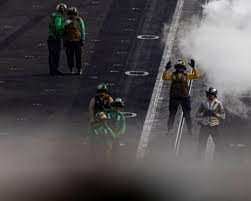
The Breaking Point: What is Really Happening Aboard the USS Abraham Lincoln?
The tension between military leadership and the reality of life at sea has reached a boiling point. While official statements paint a picture of resilience, reports from the USS Abraham Lincoln suggest a far more harrowing story. For nearly nine months, approximately 5,000 sailors have been deployed in the Middle East, facing a grueling stretch of over 250 consecutive days without a significant port visit.
The situation has sparked a heated debate, placing Pete Hegseth, the US Defense Secretary, in the spotlight as critics argue that the mental and physical well-being of the crew is being dangerously overlooked.
The Harsh Reality: Water Shortages and Mental Strain
According to reports from reputable sources such as the Navy Times and Stars and Stripes, the environment aboard the aircraft carrier has deteriorated. Sailors are reportedly dealing with:
- n
- Critical Resource Shortages: Reports of water shortages and failing plumbing systems.
- Mental Health Decline: A surge in low morale and distressing reports of sailors attempting to jump overboard.
- Psychological Exhaustion: The uncertainty of return dates, exacerbated by repeated deployment extensions.
Military health experts warn that the lack of “dry land” is not just a convenience—it is a psychological necessity. Without the ability to reset, the human mind struggles to cope with the high-pressure environment of a US Navy aircraft carrier, which essentially functions as a floating city.
Pete Hegseth’s Stance: “Completely Misrepresented”
Despite the alarming reports, Pete Hegseth has pushed back against the narrative of a crisis. The Defense Secretary claimed that the conditions aboard the USS Abraham Lincoln have been “completely misrepresented,” asserting that the military ensures every crew and captain has every available resource.
“Some deployments are longer than others, and I have more respect and gratitude for those sailors than anybody,” Hegseth stated to reporters.
However, this dismissive tone has drawn criticism from Democratic lawmakers and former naval officers who argue that gratitude is no substitute for functional plumbing and mental health support.
Expert Insights: The Cost of Uncertainty
Retired military leaders, including former Vice-Admiral Robert Murrett, emphasize that a typical deployment lasts around six months. The Lincoln’s nine-month stretch, conducted under combat conditions, is an anomaly that places an unsustainable burden on the crew.
Nancy Lacore, a retired three-star rear admiral, shared a poignant perspective on the “mental crushing” effect of having a return date revoked. She noted that while sailors are resilient, that resilience should not be used as an excuse to push them beyond their limits without a clear end in sight.
Beyond the Narrative: The Need for Holistic Support
Behavioral scientist Terri Tanielian argues that psychological counseling is only one piece of the puzzle. To truly support these service members, the military must address basic needs:
- Adequate Sleep: Ensuring crews aren’t overworked to the point of exhaustion.
- Reset Opportunities: Providing actual breaks from the high-ops tempo.
- Physical Wellness: Ensuring access to exercise and healthy nutrition.
As the US military prepares to replace the Lincoln with the USS George Washington, the conversation surrounding Pete Hegseth and the treatment of sailors serves as a critical reminder: the strength of a navy is not measured by its ships, but by the health and morale of the people who sail them.



