
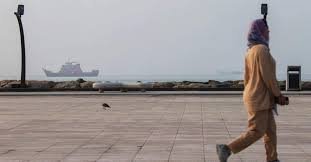
Global Energy Security at Risk: The Plunge in Oil Tanker Traffic
The maritime corridors of the Middle East are currently the epicenter of a high-stakes geopolitical chess match. Recent data indicates a worrying trend: oil tanker transits through the critical Strait of Hormuz have seen a sharp decline, reflecting the growing instability in the region.
According to preliminary data from Kpler, commodity vessel transits plummeted from ten on Sunday to just four on Monday. While some Very Large Crude Carriers (VLCCs) continue to navigate during daylight hours, the overall atmosphere remains tense as the world watches the narrow waterway that serves as a jugular vein for global energy supplies.
Financial Warfare: US Targets Black-Market Oil
Beyond the physical threats in the water, a digital war is unfolding. US prosecutors have recently moved to seize approximately $61 million in cryptocurrency. These funds are allegedly tied to black-market Iranian oil sales, used to finance the Iranian government and its military apparatus.
This move underscores a strategic shift in how sanctions are enforced, targeting the intersection of traditional energy commodities and modern digital assets to choke off illicit funding streams.
Military Escalation and Maritime Threats
The volatility is not limited to finance. The waters around the Bab el-Mandeb Strait and the Strait of Hormuz have become zones of active conflict. A significant point of contention has emerged over the oil tanker EL GAIA. While the IRGC claims the vessel struck a mine, US Central Command has flatly rejected this, asserting that Iran targeted the ship twice—once with a missile and again with a drone.
Further complicating the landscape are the Houthi missile and drone attacks in Yemen, which have resulted in civilian casualties and forced a decline in traffic through the Bab el-Mandeb. In response, Iranian forces have openly adopted an “offensive military doctrine,” signaling a pivot toward pre-emptive strikes against perceived enemies.
The Diplomatic Shift: BRICS and Beyond
As military tensions rise, Iran is aggressively pursuing new diplomatic and economic alliances to bypass Western pressure:
- n
- BRICS Integration: Reports indicate that BRICS leaders have agreed to Iran joining the New Development Bank, a move aimed at reducing reliance on Western-led financial systems.
- Chinese Relations: Iranian Foreign Minister Abbas Araghchi is scheduled for high-level talks in China, strengthening the strategic partnership between Tehran and Beijing.
- UN Intervention: The UN Security Council is convening to discuss the deteriorating situation in the Bab el-Mandeb Strait, following a request by France.
The Regional Domino Effect
The instability extends beyond the shipping lanes. From the Israeli military dismantling rocket launchers in southern Lebanon to emergency alerts issued by Saudi Arabia’s Civil Defense in Abha and Khamis Mushait, the region is on a knife-edge. The overlap of maritime threats to every oil tanker and land-based military skirmishes suggests a protracted period of volatility.
For global markets, the message is clear: the stability of energy prices is inextricably linked to the safety of these waterways. As the international community seeks a diplomatic resolution through the IAEA and UN, the risk of a major disruption to the global oil supply remains a pressing concern.



