
NYC Schools: The High Cost of Delaying Class Size Limits
New York City is currently grappling with a complex balancing act between fiscal responsibility and educational quality. In a move to safeguard the city’s budget, state lawmakers have agreed to postpone the deadline for NYC schools to implement strict limits on class sizes. While this decision is expected to save the city approximately $500 million, it has ignited a fierce debate over the future of public education and equity for the city’s children.
The Struggle Between Budget and Benchmarks
Under a 2022 state law, the New York City Department of Education (DOE) was mandated to ensure that no classroom exceeded 25 students by next fall. Achieving this goal would have required a massive overhaul, including the construction of new school spaces and the immediate hiring of thousands of educators.
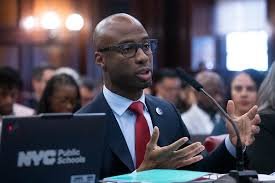
However, facing a significant budgetary shortfall, the state introduced legislation to extend this deadline by two years. According to NYC Schools Commissioner Kamar Samuels, this extension is crucial for a sustainable rollout:
“The extension of the implementation timeline will allow us to execute our capital and hiring strategies sustainably and with fidelity,” Samuels stated.
The Equity Gap: Who Truly Benefits?
While the financial savings are clear, critics argue that the delay disproportionately affects the most vulnerable students. It is widely recognized that smaller class sizes significantly improve academic outcomes, particularly for students from disadvantaged backgrounds.
Concerns have been raised regarding how resources are being allocated. A report by the Urban Institute suggests a worrying trend: additional resources are often funneled toward schools in districts with lower economic need—schools that already tend to outperform those in higher-need areas.
City Council Member Eric Dinowitz emphasized that compliance must be equitable, warning that the DOE cannot prioritize certain schools at the expense of others who are struggling to meet the mandate.
Impact on Teachers: Bonuses vs. Better Classrooms
The extension has also shifted the conversation toward teacher compensation. Through an agreement with the United Federation of Teachers (UFT), educators in classrooms that exceed the size cap may be eligible for a pay differential of up to $8,500 per year.
- n
- UFT’s Perspective: President Michael Mulgrew views this as an incentive for the city to accelerate hiring and expansion.
- IBO’s Warning: The Independent Budget Office (IBO) estimates this bonus program could cost the city over $21 million next year alone.
- The Core Issue: Louisa Chafee of the IBO noted that while bonuses help teachers, they do nothing to provide the educational benefits that smaller classes offer to students.
What’s Next for NYC Public Education?
The extension has passed both the State Assembly and Senate and currently awaits Governor Kathy Hochul’s signature. Without this reprieve, the city would have faced the logistical nightmare of hiring 3,000 new teachers over a single summer.
As the NYC Department of Education prepares its updated plan, the central question remains: can the city find a way to reduce class sizes without compromising its financial stability or leaving disadvantaged students behind?



