
North Korea Fires Multiple Ballistic Missiles: A Growing Threat in East Asia?
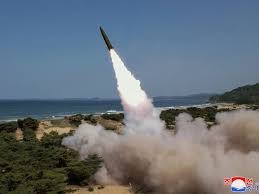
In a move that has once again put the international community on high alert, North Korea has conducted a series of ballistic missile launches. These projectiles were fired from the eastern Sinpo area, marking the seventh such provocation this year and the fourth within the month of April alone. This escalation underscores a worrying trend in the Korean Peninsula’s security landscape.
The Details of the Recent Launch
According to military reports from South Korea, the missiles were launched at approximately 6:10 am on Sunday. The targets were the waters off the eastern coast, with Japan’s government confirming that the missiles likely landed near the coast of the Korean Peninsula, without entering Japan’s exclusive economic zone.
In response to the incident, the South Korean government has implemented the following measures:
- n
- Bolstered Surveillance: Increased monitoring of North Korean military movements.
- Strategic Intelligence Sharing: Close coordination with the United States and Japan to assess the threat.
- Emergency Security Meetings: The South Korean presidential office convened an urgent meeting to discuss immediate defensive responses.
Defying the World: UN Sanctions and Nuclear Ambitions
These missile tests are not merely technical exercises; they are direct violations of United Nations Security Council resolutions. While the UN has imposed strict bans on North Korea’s missile and nuclear programs, the isolated nation continues to reject these mandates, claiming they infringe upon its sovereign right to self-defence.
The situation is further complicated by warnings from the International Atomic Energy Agency (IAEA). Director General Rafael Grossi recently highlighted “very serious” advancements in North Korea’s nuclear capabilities, potentially including a new uranium enrichment facility.
The Geopolitical Chessboard: US and China
The timing of these launches is highly strategic. The world is watching as China and the United States prepare for high-level diplomatic summits. The ability of North Korea to act as a “wildcard” in the relationship between superpowers like the US and China remains a critical point of tension.
Leader Kim Jong Un has been explicit about his goals, stating that North Korea’s status as a nuclear-armed state is irreversible. He maintains that expanding a “self-defensive nuclear deterrent” is essential for the nation’s survival and security.
Conclusion: What Comes Next?
As North Korea continues to refine its ballistic technology, the risk of miscalculation in the region grows. With nuclear capabilities expanding and diplomatic channels strained, the international community faces the daunting task of balancing deterrence with the hope of peace in East Asia.



