
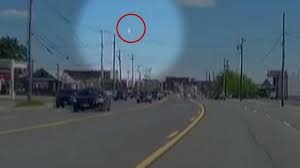
The Day the Sky Roared: Understanding the New England Sonic Boom
Residents across the northeastern United States were left startled on May 30th when a powerful sonic boom echoed across the region. What sounded like an explosion was actually a rare astronomical event: a massive meteor breaking apart in the atmosphere over New England.
The event captured the attention of thousands, with reports of a brilliant fireball followed by a shockwave that rattled windows and sparked immediate curiosity across Massachusetts and New Hampshire.
What Exactly Happened?
According to official statements from NASA, the meteor fragmented at an altitude of approximately 40 miles. The explosion occurred strategically over northeastern Massachusetts and southeastern New Hampshire, sending a powerful pressure wave toward the ground.
To put the scale of this event into perspective, NASA scientists estimated that the energy released during the meteor’s breakup was equivalent to roughly 300 tons of TNT. While that sounds catastrophic, the high altitude of the fragmentation prevented any ground-level damage.
Key Facts About the Event
- Date: May 30th
- Location: Coast of Massachusetts and New Hampshire
- Energy Release: Approximately 300 tons of TNT
- Fragmentation Altitude: 40 miles
- Impact Zone: The debris eventually fell into the waters of Cape Cod Bay
- Casualties: No injuries reported
Why Do Some Meteors Cause Sonic Booms?
Most space debris and small meteors burn up harmlessly in the Earth’s atmosphere due to friction, appearing as simple “shooting stars.” However, larger objects can survive longer as they plunge through the atmosphere at hypersonic speeds.
When these larger objects suddenly fragment or decelerate rapidly, they create booming shock waves. This phenomenon is what caused the striking “sonic boom” felt across New England, transforming a silent descent into a thunderous event.
Fortunately, because the meteor landed in the waters of Cape Cod Bay, the event remained a spectacular scientific curiosity rather than a natural disaster.



