
Near-Death Ejection: Inside the Red Sea Friendly Fire That Rocked the Truman Aircraft Carrier Strike Group
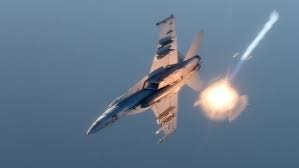
Imagine this: you’re a highly trained US Navy pilot, soaring over the volatile Red Sea, tasked with protecting crucial shipping lanes. Suddenly, a missile is launched, not by the enemy, but by a friendly warship. This chilling scenario became a terrifying reality for a pilot from the USS Harry S. Truman aircraft carrier’s air wing in late December 2024. A recently reviewed command investigation sheds light on a harrowing friendly fire incident that saw an F/A-18 Super Hornet shot down and two other American jets narrowly escape disaster.
The pilot’s own words paint a vivid picture of the chaotic moments leading up to his ejection: seeing his life flash before his eyes as a surface-to-air missile, fired by the cruiser USS Gettysburg, raced towards his aircraft. This wasn’t just a mistake; it was a catastrophic failure that sent shockwaves through the US Navy and the entire Truman aircraft carrier strike group.
A Pilot’s Nightmare: The Moment of Impact
It was December 22, just seven days after the USS Gettysburg and its strike group, led by the formidable Truman aircraft carrier, entered the Red Sea. Their mission: to counter attacks by Iran-backed Houthi rebels. In the early hours, the crew of the USS Gettysburg misidentified two US Navy F/A-18 Super Hornet fighter jets as incoming anti-ship cruise missiles. What followed was a chain of events that nearly claimed the lives of several American aviators.
The first missile launched by the USS Gettysburg was initially perceived by the F/A-18 pilot and weapons officer as targeting a Houthi drone. But their relief turned to sheer terror as the weapon abruptly changed course, locking onto their jet. “I saw my life flash before my eyes,” the pilot recounted to investigators. With no other option, the two-man team ejected from their roughly $60 million F/A-18 Super Hornet, part of Strike Fighter Squadron 11 (VFA-11), moments before impact. Both aviators thankfully survived.
Near Misses and Close Calls
The investigation revealed that the incident could have been far worse. As the first F/A-18 fell from the sky, the Gettysburg fired a second missile. This time, its target was another American fighter jet. The aviators aboard issued frantic “mayday” calls and executed evasive maneuvers, opting to outmaneuver the incoming threat rather than bail out. The missile gave relentless chase, narrowly missing the jet by mere feet before burning out and exploding harmlessly in the water. A Navy helicopter commander who witnessed the terrifying scene described his crew seeing the missile flash overhead with no prior warning.
Adding to the gravity of the situation, the USS Gettysburg had also targeted a third friendly aircraft, though it never pulled the trigger on that particular threat. This underscored the profound confusion and systemic failures at play.
Unpacking the Disaster: The Investigation’s Findings
The command investigation meticulously dissected the causes behind this critical friendly fire incident. It pointed to a confluence of failures, from shortcomings in the operational planning process to significant deficiencies within the USS Gettysburg’s combat systems. Crew fatigue was also cited as a potential contributing factor, highlighting the intense pressures faced by deployed personnel.
Crucially, the investigation identified “significant degradation” in the USS Gettysburg’s core interoperability systems early in its deployment. These issues plagued critical functions such as network management, surveillance, tracking, identification, and weapons coordination. Despite the cruiser having recently fended off actual Houthi missiles and drones, the assessment concluded that “the decisions to shoot were wrong when measured across the totality of information available” to the commanding officer, who reportedly suffered from low situational awareness, a condition his combat information center team was unable to rectify.
Broader Context: A Troubled Deployment for the USS Harry S. Truman
This Red Sea friendly fire incident was not an isolated event for the Truman aircraft carrier strike group. Its monthslong deployment in the Middle East was marred by a series of major mishaps. In February, the aircraft carrier itself collided with a cargo vessel. Furthermore, two more F/A-18s were lost to non-combat accidents: one fell off the side of the warship in April along with a tow tractor, and another slid off the flight deck during a landing failure in May.
While the Red Sea conflict has seen other friendly fire incidents – including a German warship accidentally targeting a US MQ-9 Reaper drone earlier in 2024 – the December 2024 F/A-18 shootdown remains the most serious due to its near-catastrophic consequences and the direct impact on US Navy personnel.
Lessons Learned and Future Commitments
In response to the investigation’s findings, Vice Chief of Naval Operations Adm. Jim Kilby issued a statement emphasizing the Navy’s commitment to continuous improvement. “The Navy is committed to being a learning organization,” Adm. Kilby affirmed, adding that “these investigations reinforce the need to continue investing in our people to ensure we deliver battle-ready forces to operational commanders.”
The harrowing experience of the F/A-18 pilot and the details revealed by the investigation serve as a stark reminder of the immense complexities and inherent dangers of modern naval operations. They underscore the critical importance of flawless communication, cutting-edge technology, and rigorous training to prevent such tragic incidents from recurring, especially in high-stakes environments like the Red Sea.



