
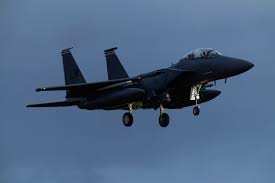
A High-Stakes Mystery: The Downfall of an American Icon in Iranian Skies
In a startling turn of events that has sent shockwaves through global intelligence communities, new reports from NBC News suggest that a U.S. F-15E Strike Eagle, downed over southwestern Iran last month, may have been struck by a Chinese-made shoulder-launched missile. This incident marks the first time in decades that a U.S. fighter jet has been brought down by enemy fire, triggering a high-risk rescue operation and a diplomatic firestorm between Washington and Beijing.
The Smoking Gun: Chinese ‘Manpads’ and Advanced Radar
According to sources familiar with the investigation, the aircraft was likely targeted by a man-portable air defense system (Manpad). These shoulder-launched missiles, roughly seven feet long and weighing about 40 pounds, provide a cost-effective and lethal method for neutralizing low-flying aircraft.
But the threat may go beyond a single missile. Intelligence suggests that China may have also provided Iran with the YLC-8B long-range early-warning radar. This sophisticated technology is specifically designed to detect stealth aircraft that are traditionally meant to evade radar detection, potentially stripping the U.S. Air Force of its tactical invisibility.
Diplomatic Friction: Trump, Xi, and the Oil Dilemma
This revelation complicates the fragile diplomatic dance between President Donald Trump and Chinese President Xi Jinping. While the Trump administration has sought China’s assistance in brokering an end to the conflict, the alleged transfer of military hardware tells a different story.
- n
- The Promise: President Xi reportedly assured President Trump that China would not provide military equipment to Iran.
- The Reality: U.S. intelligence reports suggest a continued flow of dual-use technology and air defence weaponry.
- The Leverage: As the primary buyer of Iranian oil, China holds significant economic influence over Tehran, yet continues to maintain a complex strategic partnership.
Secretary of State Marco Rubio recently emphasized to NBC News that while the U.S. acknowledges China’s role in the global oil market, Washington is not relying on Beijing’s help to resolve the conflict.
The Rescue Mission in the Zagros Mountains
The human cost of the incident was narrowly avoided. The two-man crew of the F-15 successfully ejected over Iranian territory. While the pilot was recovered within seven hours, the weapons systems officer endured a grueling two-day ordeal, hiding in the rugged foothills of the Zagros Mountains before being rescued by U.S. forces.
A History of Arms and Embargoes
The relationship between China and Iran is not new. During the 1980s and 90s, Beijing supplied Tehran with a vast array of weaponry, including tanks and ballistic missiles. Although a UN arms embargo was introduced in 2006, experts argue that China has pivoted toward providing “dual-use” components—technology that serves both civilian and military purposes—to sustain Iran’s military capabilities.
Conclusion: A New Era of Geopolitical Tension
Whether the missile that downed the F-15 was a recent delivery or a relic from old stockpiles, the implications are clear: the intersection of Chinese technology and Iranian aggression creates a volatile environment for U.S. forces in the Middle East. As investigations continue, the world watches to see if this incident will push the U.S.-China relationship toward a breaking point or force a new level of diplomatic accountability.



