
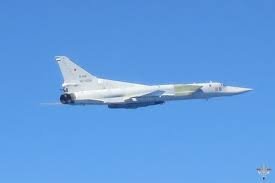
Tensions Rise in the Skies: NATO Intercepts Russian Strategic Bombers
In a powerful demonstration of military readiness and cooperation, NATO recently intercepted a fleet of Russian strategic bombers and fighter jets operating over the Baltic Sea. This maneuver serves as a stark reminder of the ongoing tensions on the alliance’s eastern flank, showcasing a coordinated response to Russian air activity in a region of critical geopolitical importance.
A Multi-National Response to Air Incursions
The operation was led by French Rafale fighters, deployed from the Šiauliai Air Base in Lithuania. As part of a long-standing NATO air-policing mission, these advanced jets were scrambled to monitor and identify the Russian flight. The French detachment did not act alone; they were joined by an international coalition of air forces, including jets from:
- n
- Sweden
- Finland
- Poland
- Denmark
- Romania
This combined effort underscores the unity of the NATO alliance in securing the airspace of its member states and partners.
The Russian Fleet: Power and Provocation
The Russian mission was a significant display of force, consisting of two supersonic Tu-22M3 strategic bombers. These massive aircraft were escorted by approximately ten fighter jets, specifically Su-30s and Su-35s, which took turns guarding the bombers throughout the flight.
According to the Russian Defense Ministry, the flight was a scheduled exercise conducted over neutral waters of the Baltic Sea, lasting over four hours. While Russia maintains that all flights comply with international rules, NATO paints a different picture.
Safety vs. Strategy: The Conflict of Narratives
The military alliance frequently scrambles aircraft because Russian planes often fail to follow standard aviation safety protocols. According to NATO reports, these aircraft often:
- n
- Fail to use their transponders (making them harder to track).
- Do not communicate with air traffic controllers.
- Operate without filing a formal flight plan.
These actions necessitate the dispatch of fighter jets to visually identify the aircraft and ensure the safety of civilian and military airspace.
The Urgency at Šiauliai Air Base
The intensity of these operations is best seen on the ground. At the Šiauliai Air Base, crews remain on high alert. When the order to scramble arrives, pilots and navigators race in vans to their hangars, already suited up and ready for takeoff within minutes. The roar of the Rafale engines taking off into the clear Baltic skies is a symbol of the constant vigilance required to maintain stability in Northern Europe.
With interceptions occurring roughly 300 times a year—even before the current conflict in Ukraine—the Baltic Sea remains one of the most active and sensitive military zones in the world. For more detailed reports on global security, you can follow updates via the Associated Press.



