NASA Swift Observatory Re-entering Earth: The End of a Cosmic Era
The Final Descent of a Space Legend
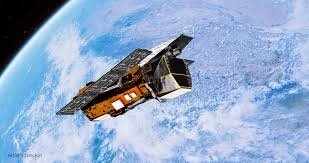
After nearly two decades of peering into the deepest reaches of the cosmos, NASA’s Neil Gehrels Swift Observatory is preparing for its final journey. Having drifted to an altitude of less than 171 miles (275 kilometres) above Earth’s surface, the spacecraft is now succumbing to atmospheric drag, which has made it impossible for its telescopes to remain steady on their celestial targets.
The observatory conducted its final official observation on October 20, and it is expected to re-enter Earth’s atmosphere within the coming weeks. While the mission is ending, the scientific impact of the Swift Observatory will be felt for generations.
A Legacy of Cosmic Fire: What Swift Discovered
Designed for a primary mission of just two years, Swift defied all expectations, remaining productive for more than ten times its original lifespan. It acted as the universe’s premier “rapid-response” unit, catching fleeting cosmic events that other telescopes simply couldn’t see in time.
Throughout its storied career, Swift has provided a treasure trove of data, including:
- n
- Gamma-Ray Bursts: Observed over 2,000 of the most powerful explosions in the known universe.
- Supernovae: Studied more than 1,400 stellar explosions.
- Black Holes: Witnessed the violent process of stars being shredded by black holes.
- Celestial Bodies: Monitored active galaxies and conducted extensive surveys of asteroids and comets.
These observations contributed to approximately 7,000 published scientific papers, fundamentally altering our understanding of how the universe evolves.
The Art of the Rapid Response
What made the Swift Observatory truly revolutionary was its speed. In the world of astrophysics, some events—like short gamma-ray bursts—peak in brightness in less than two seconds. Before Swift, locating these bursts was nearly impossible.
The observatory was engineered to detect a burst, communicate its position to other facilities, and swivel its own telescopes to image the location within about a minute. A landmark moment occurred in May 2005 with GRB 050509B, a burst lasting only 0.03 seconds. Swift’s ability to detect its afterglow validated theoretical models suggesting that short gamma-ray bursts result from the merger of two neutron stars.
A Mountain of Data for Future Generations
Even as the hardware burns up upon re-entry, the knowledge remains. The Swift archive is a goldmine for astronomers, containing nearly 22 years of measurements, spectra, and over 1.5 million images. This massive dataset spans roughly 12 terabytes—the equivalent of about 600 high-definition movies—and remains publicly available as part of NASA’s commitment to open science.
What Comes Next for NASA?
The end of the Swift mission doesn’t mean the end of rapid-response astronomy. NASA is currently exploring ways to augment its existing fleet of space telescopes and leverage fast-to-orbit commercial capabilities to fill the gap. The revolution started by Swift has proven that agility in space observation is critical for uncovering the mysteries of the changing universe.
📰 You May Also Like