
Mount Everest Route Blocked: Will a Giant Ice Block Trigger New Summit Traffic Jams?
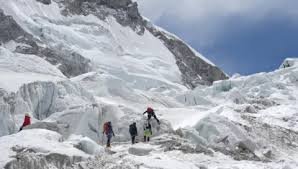
The climb to the top of the world is facing an unexpected and frozen obstacle. As the peak climbing season kicks off in the Himalayas, a massive, unstable chunk of glacier is currently blocking the critical route from Base Camp on the Nepalese side of Mount Everest.
This 100-foot-high (30m) block of ice, known as a serac, has come to a standstill just below Camp 1, leaving the world’s most ambitious mountaineers and their guides in a state of anxious waiting.
The ‘Icefall Doctors’ Face a Frozen Deadlock
The responsibility of securing the path falls on the “Icefall Doctors”—elite Sherpas from the Sagarmatha Pollution Control Committee (SPCC). These experts are tasked with fixing the ropes and ladders that allow climbers to navigate the treacherous lower sections of the mountain.
Despite their expertise, the team has found no safe way around the towering ice block. According to Tshering Tenzing Sherpa, the SPCC base camp co-ordinator, there are currently no artificial means to melt the ice safely. The only viable strategy? Patience. The team is waiting for the serac to melt and crumble naturally, a process they hope will happen within a matter of days.
The Looming Threat: Summit ‘Traffic Jams’
This delay isn’t just a logistical headache; it’s a safety concern. The spring season offers a very narrow window of favourable weather, typically lasting only until the end of May. With preparations now weeks behind schedule, fears are mounting that climbers will once again be forced into dangerous queues to reach the summit.
Purnima Shrestha, a renowned climber and photographer attempting her sixth Everest summit, expressed her concerns from Base Camp: “Delays in the opening of the route have added concerns of possible ‘traffic jams’ to the peak this year.”
Key Challenges for the Current Season:
- Compressed Timeline: A shorter weather window means more climbers attempting the summit simultaneously.
- Environmental Instability: The warming climate is making glacial movements more unpredictable.
- Logistical Backlogs: Rope-fixing teams are unable to reach Camp 3, delaying the acclimatization process for hundreds of climbers.
Emergency Solutions: Airlifting the Way Forward
To mitigate the delay, Nepal’s Department of Tourism is exploring drastic measures. Ram Krishna Lamichhane, the department’s director general, mentioned the possibility of airlifting rope-fixing teams and logistics directly to Camp 2 via helicopter. This would allow the teams to secure the route from the top down, ensuring that once the serac melts, the path to the summit is already prepared.
The Rising Cost of a Himalayan Dream
Despite global geopolitical tensions and rising fuel costs, the allure of Mount Everest remains strong. This year, 367 permits have already been issued, with a significant number of climbers hailing from China.
However, climbing the peak is becoming increasingly expensive. To manage the crowds and improve safety, Nepal has hiked permit fees for foreign nationals to $15,000 USD, while fees for Nepalese climbers have doubled to $1,000.
As the mountaineering community watches the ice, the hope is that nature will clear the path quickly, allowing for a safe and orderly ascent to the highest point on Earth.



