Moon Tonight: Everything You Need to Know About the Spectacular Beaver Supermoon
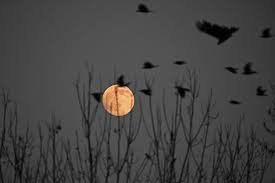
Get Ready for a Celestial Spectacle: The Moon Tonight
While Thanksgiving week is usually packed with travel, turkey, and football, there is something even more captivating happening above us. If you are wondering about the moon tonight, you are in for a treat. From November 23 to 25, the night sky will be dominated by a stunning phenomenon known as a supermoon.
This particular event marks the beginning of a rare trilogy of supermoons, with subsequent peaks expected on Christmas Eve and January 22. Whether you are a seasoned stargazer or just someone who enjoys a beautiful night sky, this is an event you cannot miss.
What Exactly is a Supermoon?
To understand why the moon looks so impressive tonight, we have to look at the science of lunar orbits. A full moon occurs when the Earth is positioned directly between the sun and the moon, illuminating the entire visible side of our satellite.
However, the moon doesn’t orbit Earth in a perfect circle; instead, it follows an elliptical (egg-shaped) path. This creates two distinct points:
- n
- Perigee: The point where the moon is closest to Earth (approximately 223,000 miles).
- Apogee: The point where the moon is farthest away (approximately 252,000 miles).
When a full moon coincides with the perigee, we get a supermoon. Compared to a “micromoon” (a full moon at apogee), a supermoon can appear up to 14% larger and shine up to 30% brighter, creating a luminous glow that transforms the nighttime landscape.
The Great “Moon Illusion”: Why Does It Look So Huge?
You might notice that the moon looks absolutely massive when it is hovering just above the horizon. While some critics, like astronomer NASA experts and Neil deGrasse Tyson, argue that the physical size difference is marginal (comparable to a 16-inch pizza versus a 15-inch one), our eyes tell a different story.
This is known as the Moon Illusion. Astronomers believe this happens because when the moon is near the horizon, our brains compare it to terrestrial objects like trees, houses, and cars, making it appear dwarfed in comparison. Furthermore, as the light travels through more of Earth’s atmosphere at the horizon, blue light is scattered, leaving behind the vivid red and yellow hues that our brains often associate with larger size.
Why is it Called the “Beaver Moon”?
Full moons often carry traditional names rooted in nature and folklore. This November supermoon is most commonly known as the Beaver Moon, reflecting the time of year when beavers finish their winter preparations and retreat into their lodges.
Depending on who you ask, this moon has other names too. According to the Farmer’s Almanac, it is also referred to as the “Digging Moon” (for animals scratching for autumn nuts) or the “Deer Rutting Moon.”
How to Watch the Show
While the peak of this supermoon occurs on Tuesday morning (9:53 a.m. EST), the best viewing experiences happen during the evenings of November 23, 24, and 25.
Pro Tip: For the most dramatic view, try to catch the moon right as it rises over the horizon to experience the full effect of the moon illusion.
So, take a break from the holiday chaos, step outside, and look up. Whether you call it a Beaver Moon or simply a beautiful sight, it’s a reminder of the wonders of our universe.
📰 You May Also Like