
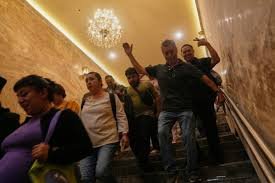
The Glittering Facade of Mexico City’s World Cup Prep
As the countdown to the 2026 FIFA World Cup begins, Mexico City is undergoing a transformation that is as visually stunning as it is controversial. While the city prepares to welcome millions of football fans from across the globe, a strange phenomenon has taken over the capital’s transit system: high-end glamour in the middle of the daily commute.
The center of this whirlwind is the Hidalgo metro station. Known for its usual grit and frantic pace, the station has recently become a viral sensation. Why? Because the government installed opulent chandeliers and Victorian-style wall lamps, turning a subway commute into something resembling a scene from Titanic or Harry Potter.
The Rise of the ‘Meme Station’
The internet, as expected, did not let this pass unnoticed. The contrast between the luxurious lighting and the utilitarian nature of the metro sparked a wave of memes. Social media influencers have turned the station into a stage, with videos showing commuters arriving in tuxedos, top hats, and even full costumes of Napoleon Bonaparte and the Beast from Disney’s Beauty and the Beast.
But the aesthetic overhaul doesn’t stop at the subway. The city is experiencing what locals call “axolotlization.” This includes:
- n
- Vibrant Murals: Cartoon axolotls (the beloved native salamander) plastered across metro cars and walls.
- Colorful Infrastructure: Bridges painted in bright purple and the planting of traditional Mexican marigolds.
- Airport Upgrades: Extensive renovation work at the Benito Juárez International Airport to streamline the arrival of international visitors.
Aesthetic Makeover vs. Structural Necessity
While some residents find the changes amusing or a point of pride, many see it as a superficial “coat of paint” on a crumbling foundation. Critics argue that the government is prioritizing a “failed aesthetic” over critical urban needs. For many Chilangos (Mexico City residents), the sight of a freshly painted purple bridge next to a massive pothole is a symbol of misplaced priorities.
“All these renovations are like putting makeup on the city,” says Silvia Escamilla, a local commuter. “The infrastructure they could actually invest in just isn’t there.”
Art historians and urban planners have echoed these concerns, pointing out that a truly functional city is reflected in well-maintained sidewalks and reliable transportation, not in frivolous murals while streets continue to flood during the rainy season.
More Than Just a Game
The tension surrounding the FIFA World Cup 2026 extends beyond infrastructure. Social movements, including teachers’ unions and families searching for missing persons, are using the global spotlight to demand justice and government accountability. There are also ongoing accusations regarding the displacement of street vendors to “clean up” the city’s image for tourists.
Despite the friction, there is a glimmer of optimism. Some residents believe that the event forces the government to make improvements that might have otherwise been ignored. More importantly, they see it as an opportunity to shatter international stereotypes.
“Mexico isn’t just how others stereotype us,” notes local resident Mirna Baranco. “Mexico has a lot to give the world.”
As the opening ceremony approaches, Mexico City remains a city of contrasts: where chandeliers hang over construction zones, and where the passion for football meets the struggle for a better urban reality.



