
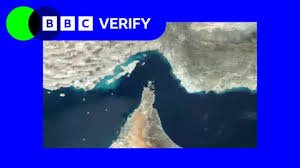
Rising Volatility in the Gulf: The Seizure of the Hui Chuan
The waters of the Gulf of Oman have once again become a flashpoint for geopolitical tension. In a bold move, Iranian military personnel have reportedly seized a ship operating as a “floating armoury,” according to data provided by the maritime risk management firm Vanguard.
The vessel, identified as the Honduras-flagged Hui Chuan, was intercepted and is currently being escorted toward Iranian territorial waters. This movement was confirmed by the UK Maritime Trade Operations (UKMTO), signaling a precarious moment for international shipping lanes.
What is a “Floating Armoury”?
For those unfamiliar with the complexities of maritime security, a floating armoury is a specialized ship designed to store weapons and ammunition for private security firms. These firms provide essential protection for commercial vessels navigating high-risk areas to defend against pirate attacks.
According to BBC Verify, these vessels are typically strategically positioned in the Red Sea, the Gulf of Aden, and the Gulf of Oman, allowing security guards to efficiently collect and drop off their equipment.
A String of Maritime Attacks: The Tragedy of the Haji Ali
The seizure of the Hui Chuan is not an isolated event. The region has seen a spike in volatility, highlighted by a recent attack on an Indian-flagged vessel, the Haji Ali. Reports indicate that the 57-meter vessel sank off the coast of Oman following a suspected explosion, believed to have been caused by a drone or missile strike.
- n
- The Vessel: Haji Ali (Indian-flagged).
- The Incident: A sudden fire and explosion led to the ship sinking.
- The Outcome: All fourteen crew members were safely rescued by the Oman Coast Guard and transferred to Diba Port.
India’s Ministry of External Affairs has officially labeled this attack as “unacceptable,” underscoring the growing danger for neutral commercial shipping in the region.
Global Diplomacy and the Strait of Hormuz
The strategic importance of this region cannot be overstated. The Strait of Hormuz is one of the world’s most critical chokepoints for global energy supplies. The recent instability has triggered high-level diplomatic discussions between global superpowers.
During recent talks in Beijing, US President Donald Trump and Chinese President Xi Jinping addressed the militarization of the Strait. The White House reported that both leaders agreed on a fundamental point: the Strait of Hormuz must remain open to ensure the free flow of energy and maintain global economic stability.
Monitoring the Situation
As tensions persist, maritime experts rely on real-time tracking data from platforms like MarineTraffic to monitor vessel movements and identify potential risk zones. The intersection of private security, national militaries, and global diplomacy continues to make the Gulf of Oman a high-stakes environment for every ship that passes through its waters.



