
Lycoming County’s 2026 Budget: Navigating Fiscal Challenges with a Balanced Outlook
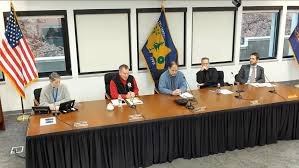
Lycoming County residents, brace yourselves for a detailed look into the proposed 2026 budget. Unveiled by the Lycoming County Commissioners, this financial blueprint presents a mix of crucial decisions, balancing immediate needs with long-term fiscal health. While the good news points to a structurally balanced budget, taxpayers will face a modest increase, signaling a significant shift in the county’s financial management.
A Balanced Budget, But Not Without Sacrifice
The proposed 2026 budget for Lycoming County stands at an impressive $123,254,342. For the first time in several years, this budget is balanced without drawing a single dollar from the county’s critical fund balance. This achievement, however, comes with a caveat: a proposed 0.5 mill tax increase for residents and necessary budgetary cuts across various departments.
The Taxpayer Impact
For the average Lycoming County taxpayer, a half-mill increase translates to an additional $50 per $100,000 of a property’s assessed value. Commissioner Scott Metzger highlighted that this marks the first tax increase for the county since 2018, underscoring the gravity of the decision.
“The preparation of the 2026 budget has been exceptionally stressful and challenging,” stated Mya Toon, Director of Financial Management for Lycoming County. She attributed much of this difficulty to external factors like state budget impasses and federal government shutdowns, which severely delayed crucial reimbursements and revenue streams that the county heavily relies upon.
Behind the Numbers: Rising Costs and Historical Challenges
Internal fiscal pressures further compounded the external challenges faced by Lycoming County. Ms. Toon pointed to several key areas contributing to escalating expenses:
- Healthcare Costs: An approximate increase of $4.63 million.
- Juvenile Probation Services: An additional $2.68 million.
- Landfill Struggles: Persistent financial difficulties for the county’s landfill operation.
A significant long-standing issue has been the historical practice of drawing from the fund balance to cover operational gaps. This approach, rather than securing sustainable revenue solutions for capital projects, has left Lycoming County in a vulnerable financial position. “For several years, these types of critical financial issues have not been adequately addressed,” Toon explained, “and as a result, we are now facing significant budgetary cash flow pressures that require immediate and responsible action.”
Commissioners Chart a New Course for Lycoming’s Fiscal Future
The commissioners are resolute in their commitment to steer Lycoming County towards long-term fiscal health. The difficult decisions made for the 2026 budget include tightening departmental budgets, reducing discretionary spending, and meticulously managing the fund balance – the county’s essential reserve, ideally covering three months of operating costs.
Commissioner Marc Sortman emphasized the critical importance of protecting the fund balance. “We did not touch the fund balance – that’s our savings account,” he asserted, stressing a departure from previous practices. The goal is to replenish this balance to a healthy $20 million, with an estimated $500,000 annual contribution.
Furthermore, Sortman was critical of the past reliance on TRANS (Tax and Revenue Anticipation Notes) – essentially short-term loans to cover expenses until tax revenues materialize. While the county will still need to utilize TRANS this year, the commissioners are committed to eliminating its use in future budgets, aiming for greater financial autonomy for Lycoming County.
Addressing Deep-Rooted Debt: The Lycoming Landfill and Beyond
During the budget process, a stark reality about the county’s landfill came to light. Commissioner Sortman revealed over $27 million in bonds borrowed against the landfill. “The landfill that I was told for 20 years as a resident is a cash cow. I don’t know how a cash cow owes $27 million,” he remarked, highlighting the discrepancy between public perception and financial reality. Concerns were raised about the remaining land space’s ability to generate enough revenue to pay off this significant debt, especially given current Pennsylvania Department of Environmental Protection (DEP) regulations.
Beyond the landfill, Lycoming County also carries bonds totaling $57 million, with maturity dates stretching from 2030 to 2040. Sortman expressed the gravity of this long-term obligation, recognizing that future generations could be burdened by debt incurred today. “My gosh, that’s my son’s generation and maybe my grandchildren’s generation that are going to be paying off a debt that was created before the three of us sat at this table and that’s huge,” he stated.
A Vision for Change and Efficiency
The Lycoming County Commissioners are not shying away from the challenges. They are actively scrutinizing construction project costs, eliminating open positions from the Table of Distribution and Allowances (TDA), and fostering a culture of efficiency. “We’re going to find out the best way to run a county. We’re not going to be overstaffed. We’re not going to have outside contractors doing work that our own contractors, our own staff can do,” Sortman declared.
This proactive approach reflects a strong commitment to redefine the fiscal landscape of Lycoming County, ensuring transparency, accountability, and sustainable growth. The proposed budget is now available for public review on the county’s website before the final vote on December 18.
The road ahead for Lycoming County‘s finances is undeniably complex, but the commissioners are unified in their mission to address long-standing issues and build a more secure future for its residents. For more insights into local government financial management, you might explore resources from organizations like the Government Finance Officers Association (GFOA).



