
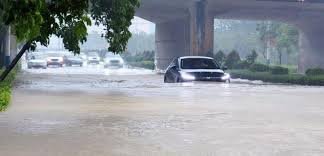
Crisis at Liulan Reservoir: Nanning Escalates Flood Response to Level 1
The city of Nanning in Guangxi is currently facing a critical hydrological crisis. Following days of relentless precipitation, the Liulan Reservoir in Hengzhou has reported a severe emergency, with a breach discovered in the dam body. This development has pushed local authorities to upgrade the flood control emergency response to Level 1, the highest alert level, as they race against time to prevent a larger catastrophe.
The Impact of Typhoon Meshak
The catalyst for this environmental disaster was Typhoon Meshak. Since early July, the region has been hammered by torrential rains, with some areas experiencing “extreme rainstorms.” The sheer volume of water has overwhelmed local infrastructure, leading to rapid rises in river levels and putting immense pressure on reservoirs across the province.
According to meteorological data, the rainfall intensity was staggering. In Lu-xu Town, Binyang County, daily rainfall peaked at a shocking 637.0 mm, contributing to a widespread systemic failure of water containment in several districts.
Regional Water Crisis and River Overflows
The danger is not limited to the Liulan Reservoir. The Guangxi Water Resources Department has issued an orange flood warning, noting that several key waterways are reaching dangerous thresholds:
- Yu River: Predicted to rise by 1 to 2 meters in the urban sections of Nanning.
- Xinjiang River: Expected to exceed warning levels by approximately 5.5 meters in the Yongning District.
- Qinglong River: Forecasted to exceed warning levels by 3.9 meters in the Changtang Town area.
- Lingli River and Sitang River: Both are reporting levels well above safety warnings.
In total, 82 stations across 65 rivers—including the Yu River and the Pinglu Canal—have exceeded their warning levels, highlighting the scale of the flooding in the Guangxi region.
Emergency Rescue and Evacuation Efforts
As the breach at the Liulan Reservoir threatens downstream communities, a massive coordinated effort is underway. Emergency services, fire departments, and water conservancy experts are currently on-site performing two primary tasks:
- Critical Dam Repair: Engineers are working to seal the breach and stabilize the dam structure to prevent total collapse.
- Mass Evacuations: Priority is being given to moving residents from high-risk zones to safer ground to minimize casualties.
For those living in flood-prone areas, it is essential to follow official government directives and stay updated via local emergency broadcasts. For more information on how to prepare for extreme weather events, you can refer to the World Meteorological Organization (WMO) guidelines on disaster risk reduction.
The situation remains fluid, and authorities continue to monitor the rainfall patterns to determine if further evacuations are necessary.



