Lead Azide Detonation: Emergency Safety Measure or Environmental Risk?
The Ticking Clock: The Controversy Over Lead Azide Detonation in Iowa
In a high-stakes clash between national security and environmental safety, the U.S. Army is preparing to detonate nearly five tons of deteriorating lead azide at the Iowa Army Ammunition Plant in Middletown. Despite a court-ordered pause on environmental permits, the Army is moving forward, citing an immediate threat to public safety.
The situation has sparked a heated debate: Is this a necessary emergency action, or a case of government mishandling that puts thousands of residents at risk?
Why Now? The Danger of Freezing Temperatures
The U.S. Justice Department and the Army argue that a sudden drop in temperature—forecasted to fall below 30 degrees—poses a critical risk. According to federal officials, crystals formed within the lead azide during storage can fracture more easily in freezing conditions. This instability could trigger an uncontrolled explosion, which would be far more catastrophic than a managed detonation.
Furthermore, the Army claims that the concrete storage bunkers are now more vulnerable to temperature swings because the blast doors were removed in preparation for the operation and cannot be replaced.
Environmental and Health Alarms
Environmental advocacy groups, including the Iowa Environmental Council and the Sierra Club, are sounding the alarm. Their primary concern is the release of lead dust into the atmosphere. As a known neurotoxin, lead has no safe level of exposure. It can:
- n
- Damage the developing brains of young children.
- Increase the risk of miscarriage or premature birth during pregnancy.
- Cause long-term learning and behavioral problems.
Beyond lead, experts have raised concerns about hydrazoic acid—a colorless, volatile, and highly toxic gas that could be released during the blast. There are also fears that the contamination could reach the Iowa River, a vital water source for local treatment plants.
Legal Battles and Lack of Transparency
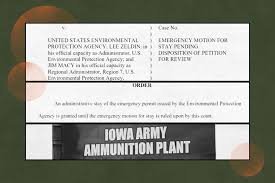
The 8th U.S. Circuit Court of Appeals had temporarily suspended the EPA’s emergency permit, but the Army is invoking a separate emergency exemption to bypass the judicial process. Critics argue that this “emergency” is a result of years of neglect. Reports indicate that concerns over deteriorating lead azide at the plant date back as far as 2004.
Adding to the controversy is the revelation that the Army previously hired a contractor for chemical neutralization—a safer alternative to detonation—only to cancel the contract two months later. This has led legal experts to question why a more sustainable disposal method was abandoned.
How Residents Can Protect Themselves
With the potential for lead dust to travel significant distances, health organizations are urging residents in the path of the plume to take proactive measures:
- Document Conditions: Hire a certified professional to collect soil and dust samples before the detonation.
- Seal the Home: Follow local guidance to keep outdoor air from entering living spaces.
- Avoid Dry Sweeping: Using brooms or pressure washers can spread settled lead dust; professional abatement is recommended.
For more information on the dangers of lead exposure, you can visit the Environmental Protection Agency (EPA) or the World Health Organization (WHO).
Final Thoughts
The tension between the Army’s need for immediate disposal and the public’s right to a toxin-free environment highlights a systemic failure in hazardous waste management. As the countdown to detonation continues, the focus remains on whether the safeguards in place are enough to prevent a long-term environmental disaster.
📰 You May Also Like