
Japan on High Alert: Major Earthquake Warning Following Powerful 7.7 Magnitude Tremor
Japan is once again facing the daunting reality of its seismic volatility. Following a violent magnitude 7.7 earthquake that struck the waters off the coast of the Iwate prefecture, the Japan Meteorological Agency (JMA) has issued a stark warning: the risk of a “major” earthquake—with a magnitude of 8.0 or higher—is now significantly increased.
The Immediate Impact: Tsunami Alerts and Coastal Shaking
The earthquake occurred on Monday at 4:53 PM local time, sending shockwaves across the northern part of the country. The intensity was such that skyscrapers in Tokyo, hundreds of kilometres away from the epicentre, swayed for over a minute.
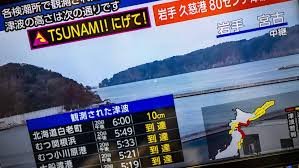
Immediate concerns shifted to the ocean as the JMA issued a tsunami warning. While initial predictions feared waves of up to three metres, the alert was later adjusted to one metre. Despite the reduction, the threat was real: a tsunami wave of 80 centimetres was recorded at the port of Kuji in Iwate, shortly after an initial 70-centimetre surge.
Fortunately, government spokesperson Minoru Kihara reported that there were no immediate reports of serious injuries or catastrophic damage. However, the relief is tempered by the looming possibility of more powerful aftershocks.
Why the Risk Remains High: The Nankai Trough and the Ring of Fire
Japan’s geography makes it one of the most seismically active regions on Earth. Situated at the junction of four major tectonic plates along the Pacific Ring of Fire, the archipelago experiences approximately 1,500 tremors annually.
A primary point of concern for scientists and the government is the Nankai Trough. This 800-kilometre underwater trench is where the Philippine Sea Plate slides beneath the continental plate. Experts warn that a “mega-quake” in this region could be devastating, with potential casualties reaching hundreds of thousands and economic damages in the trillions of dollars.
A Nation Haunted by History
The current tension is deeply rooted in the trauma of March 2011, when a massive 9.0 magnitude earthquake triggered a catastrophic tsunami, leading to approximately 18,500 deaths or disappearances. More recently, the Noto Peninsula was struck in January 2024 by a 7.5 magnitude quake that claimed nearly 470 lives.
Because of this history, the Japanese government and the JMA are urging extreme caution. The official advice remains clear:
- Stay Vigilant: Be alert for strong aftershocks for at least one week.
- Evacuate Immediately: If you are in coastal or riverside areas, move to higher ground or designated evacuation buildings.
- Stay Put: Do not leave safe zones until all official alerts have been lifted.
Looking Forward: Preparedness is Key
As Prime Minister Sanae Takaichi’s office activates crisis management cells, the world watches as Japan employs its advanced early-warning systems to mitigate disaster. For those interested in tracking global seismic activity, the USGS (U.S. Geological Survey) provides real-time data on tectonic movements worldwide.
Stay informed and follow local authority guidelines to ensure safety during these volatile periods.



