
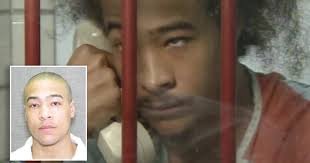
James Broadnax: Justice or Error? The Final Hours of a Texas Death Row Inmate
The legal system is often viewed as a quest for absolute truth, but in the case of James Broadnax, that truth has become a subject of intense debate. As the clock ticks down toward his scheduled execution by lethal injection in Huntsville, Texas, a shocking twist in the case has raised questions about the finality of the death penalty.
The Tragedy at Zion Gate Records
The roots of this case trace back to 2008 in Garland, Texas. What began as a planned robbery ended in a brutal double homicide that shook the community. The victims were Matthew Butler, a talented aspiring Christian singer and father of two, and his colleague, Stephen Swan.
The victims were killed outside Zion Gate Records, a Christian music recording studio. According to reports, Broadnax and his cousin, Demarius Cummings—both 19 at the time—targeted the area looking for “rich white folks.” In a chilling detail, the duo reportedly walked away from the crime scene with only $2 stolen from the victims.
A Confession vs. A New Claim
For years, the case seemed open and shut. In a widely circulated jailhouse interview with FOX 4, James Broadnax confessed to the murders and expressed a haunting lack of remorse, famously dismissing the victims’ families with a profanity-laced comment.
However, the narrative shifted recently. Demarius Cummings has now come forward, claiming that he was the one who actually pulled the trigger. Cummings argues that DNA evidence found on the weapon links back to him, not Broadnax, attempting to shift the ultimate responsibility for the killings.
The Legal Deadlock: Why the Execution Proceeds
Despite Cummings’ sudden admission, the judicial system has remained unmoved. Here is a breakdown of the recent legal developments:
- n
- Texas Court of Criminal Appeals: The court refused to intervene, stating that Broadnax had never formally recanted his original confession.
- Due Process: The court argued that even if the confession was potentially flawed, it did not constitute a violation of due process.
- U.S. Supreme Court: In a final blow to Broadnax’s legal team, the Supreme Court rejected multiple appeals to halt the execution.
A Moral Crossroads
The case has sparked a political and moral outcry. Texas State Rep. Rhetta Andrews Bowers has urged for a pause in the execution, emphasizing that the stakes are too high for uncertainty. In a powerful statement, Bowers argued that “when doubt exists, even in the smallest measure, we must choose caution over haste.”
The core of the debate lies in the irreversibility of the death penalty. If Cummings is telling the truth, the state may be executing a man for a crime he did not personally commit, despite his earlier confession.
Further Reading on Justice and Law
To understand more about how the death penalty is managed in the United States, you can visit the official Texas Department of Criminal Justice or explore the legal standards for appeals at the Supreme Court of the United States.
As James Broadnax awaits his final hours, his story serves as a stark reminder of the complex intersection between confession, evidence, and the permanent nature of capital punishment.



