
Fragile Hope: Is the Israel-Hezbollah Ceasefire Already Collapsing?
The hope for a momentary pause in Middle East hostilities has been met with a grim reality. Despite a brokered agreement intended to silence the guns, the Israel-Hezbollah ceasefire has been marred by immediate violence, leaving many to wonder if the deal was ever meant to hold.
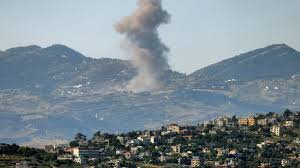
While diplomats from the United States, Qatar, and Iran worked tirelessly to orchestrate a halt in hostilities, the ground reality in southern Lebanon tells a different story. Minutes after the ceasefire deadline, the skies remained filled with smoke and the air echoed with artillery shelling.
The Human Cost: Violence Post-Deadline
According to the Lebanese health ministry, the aftermath of the ceasefire announcement has been devastating. Since midnight on Friday, Israeli strikes have resulted in:
- n
- At least 47 fatalities in southern Lebanon.
- 97 wounded civilians and combatants.
- Over 12 documented air raids and continuous artillery barrages.
n
n
n
For the residents of cities like Tyre, the experience is one of haunting familiarity. Reporting from the ground, journalists have described a sense of “deja vu,” where ceasefire announcements are merely precursors to renewed bursts of military activity rather than a genuine path to peace.
The Conflict of Narratives: “Operational Freedom” vs. “Permanent War”
The disconnect between diplomatic rhetoric and military action is stark. While a senior US official confirmed that both sides had agreed to the Israel-Hezbollah ceasefire, the Israeli military has maintained a loophole. A military spokesperson stated that forces would retain “operational freedom” to respond to perceived threats—a phrase that effectively allows Tel Aviv to continue strikes while technically claiming to adhere to the agreement.
On the other side of the ideological divide, Iranian Foreign Minister Abbas Araghchi has accused Israel of seeking nothing less than “permanent war.” These comments came as a reaction to inflammatory statements by Israel’s National Security Minister, Itamar Ben-Gvir, who urged for Lebanon to be “burned” following the deaths of four Israeli soldiers.
Diplomatic Fallout: US-Iran Talks on Hold
The volatility on the ground has had immediate repercussions for global diplomacy. Talks between the United States and Iran regarding a recently signed memorandum of understanding (MoU) were abruptly called off on Friday.
Key developments include:
- n
- Canceled Missions: Iranian officials canceled their planned trip to Switzerland, insisting that the fighting in Lebanon must stop before negotiations can resume.
- Postponed Diplomacy: US Vice President JD Vance has also postponed his scheduled trip.
- Iranian Demands: Iran’s Ministry of Foreign Affairs emphasized that ending the war in Lebanon is an integral part of any broader regional ceasefire arrangement.
n
n
n
What This Means for Regional Stability
The failure to maintain the Israel-Hezbollah ceasefire threatens more than just local stability; it jeopardizes the reopening of the Strait of Hormuz to global shipping and the possibility of a lasting regional peace deal. As long as “measured responses” are replaced by calls to “go berserk,” the path to peace remains obstructed by the machinery of war.
Whether this interim agreement can be salvaged or if it was merely a tactical pause remains to be seen, but for the people of southern Lebanon, the silence they were promised has yet to arrive.



