
Safety First in Orbit: The Dramatic Retreat to the SpaceX Dragon
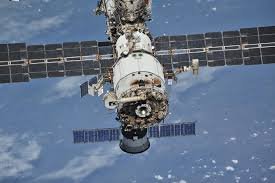
Imagine floating 400 kilometres above Earth, only to be told that your home in the stars has a leak. This was the reality for the crew of the International Space Station (ISS) this past Friday. In a move defined by extreme caution, astronauts—including French astronaut Sophie Adenot—were required to temporarily evacuate the main station and seek refuge inside their docked spacecraft.
The decision came as a precautionary measure while technicians worked to address a pressure issue in one of the station’s critical sections. This event highlights the constant vigilance required to maintain human life in the harsh vacuum of space.
The Root of the Problem: The Zvezda Module
The source of the concern was the Zvezda module, a key component of the Russian segment of the station managed by Roscosmos. The Russian space agency had scheduled operations to seal a detected air leak. While such repairs are part of the station’s maintenance, the potential risks prompted NASA to implement a safety protocol.
To ensure the crew’s absolute safety, NASA requested that the astronauts move into the SpaceX Dragon capsule. This vessel serves not only as a transport vehicle but as a high-tech “lifeboat” during emergencies.
Who was involved in the evacuation?
The safety measure affected the SpaceX Crew-12 team, comprising a diverse international group of explorers:
- n
- Jessica Meir (USA)
- Jack Hathaway (USA)
- Andrei Fedyaev (Russia)
- Sophie Adenot (France)
- Chris Williams (NASA astronaut who had recently joined the station via a Russian vessel)
A Routine Part of Extraordinary Training
While the situation may sound alarming to those of us on the ground, NASA officials emphasized that this procedure is a standard part of astronaut training. These drills are practiced both in simulated environments on Earth and during actual missions to ensure that if a real catastrophe occurs, the crew can react instinctively.
Once the danger was mitigated, the atmosphere returned to its usual professional calm. NASA astronaut Jack Hathaway lightheartedly informed the Houston control room that they would simply “tidy up the mess” and get back to their busy scientific schedules.
The Future of the International Space Station
The ISS has been continuously inhabited for over 25 years, serving as a beacon of international cooperation. However, like any structure, it is showing its age. The Zvezda module, in particular, has suffered from persistent air leaks over the last few years, including a notable incident in May.
As the station nears the end of its operational life, plans are already in motion for its decommissioning. The NASA agency has indicated that the International Space Station is expected to be deorbited around 2030, making way for new commercial space stations and the next era of lunar exploration via SpaceX and other partners.



