
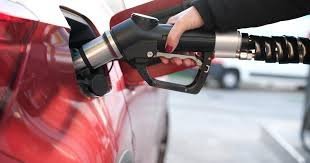
The Shock at the Pump: Why Gas Prices are Climbing
If you’ve visited a fueling station recently, you’ve likely noticed a painful trend: gas prices are on a steep upward trajectory. According to recent data from AAA, the national average for gasoline has jumped to $4.44 a gallon, marking a nearly 50% increase since the onset of conflicts involving Iran in February.
But it’s not just gasoline. Diesel fuel—the lifeblood of the American supply chain—has hit a staggering record of $6.40 per gallon. For many consumers, this isn’t just a number on a screen; it’s a direct hit to their monthly budget and a signal of broader economic instability.
The Geopolitical Storm Driving Costs
Experts agree that the current spike is not a coincidence but a result of “festering geopolitical conflicts” overseas. The global oil market is currently reacting to a volatile cocktail of events:
- n
- The Russia-Ukraine War: Ukrainian drone strikes have significantly crippled Russian refining capacity, removing millions of barrels from the global supply.
- Middle East Instability: Conflicts involving Iran and attacks by Houthi rebels in the Red Sea have disrupted critical shipping lanes and oil pipelines.
- Pipeline Sabotage: Attacks on Saudi Arabia’s East-West pipeline have reportedly cut 4 million barrels per day from the market, creating a supply vacuum.
The Refining Crisis: More Than Just Crude Oil
It isn’t just about how much oil is in the ground; it’s about how much can be processed. Patrick De Haan of GasBuddy highlights that reduced refining capacity is a primary driver of the current shortage.
Domestic issues are also playing a role. For instance, a power outage at an ExxonMobil refinery near Chicago recently halted production, sending shockwaves through Midwest fuel prices. When refining capacity drops, the cost of every gallon of gas and diesel rises, regardless of the crude oil price.
Beyond the Gas Tank: The “Turbocharged” Inflation
While many drivers try to save money by driving less, the surge in diesel prices creates a ripple effect that affects everyone. Tom Kloza, chief energy adviser for Gulf Oil, warns that high diesel costs “turbocharge” inflation. Here is why:
- n
- Transportation: Almost everything—from fresh produce to electronics—is moved by trucks and rail powered by diesel.
- Agriculture: Farming equipment relies heavily on diesel, increasing the cost of food production.
- Home Heating: In the Northeast, millions of households rely on heating oil (a diesel derivative), meaning winter utility bills could soar.
Regional Disparities: Who is Hit Hardest?
The pain of rising fuel costs is not distributed evenly across the United States. Geographic location and local refining infrastructure play a massive role:
- n
- California: Leading the surge with gasoline often exceeding $6 per gallon and diesel averaging a shocking $8.35.
- Illinois: Averaging $4.78 per gallon, well above the national average.
- The “Red vs. Blue” Divide: Kloza notes that “Red states” often see lower prices because they are closer to the sources of energy production and refining hubs.
Final Outlook: Should You Brace for More?
The short-term forecast remains grim. With Brent crude trading around $103 a barrel and global tensions showing no signs of easing, experts suggest that gas prices could hover between $4.25 and $4.50, while diesel may climb even further to $6.60 per gallon. For the American consumer, the message is clear: buckle up and plan for higher energy costs for the foreseeable future.



