
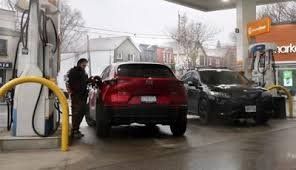
The Battle at the Pump: Tax Breaks vs. Global Oil Volatility
For many Canadian drivers, the news of a federal excise tax break felt like a much-needed win. With the government aiming to provide relief at the pump, the announcement promised a reduction in costs to help families manage their budgets. However, as is often the case with gas prices, global geopolitics have a way of overriding local incentives.
The Promise: What the Tax Break Offers
The federal excise tax suspension, which is set to run until September 7, was designed to provide immediate financial breathing room. Here is the breakdown of the expected savings:
- n
- Gasoline: An estimated reduction of 10 cents per litre.
- Diesel: An estimated reduction of 4 cents per litre.
Prime Minister Mark Carney framed this move as a way to “build Canada strong for all,” focusing on factors within domestic control to offset the rising cost of living.
The Reality: Why Your Wallet Might Not Feel the Difference
While a 10-cent drop sounds significant, energy experts warn that these savings could be completely erased by volatility in the international oil market. The primary culprit? The escalating conflict involving the U.S., Israel, and Iran, specifically centered around the Strait of Hormuz.
The Strait of Hormuz is one of the world’s most critical maritime chokepoints, handling approximately 20% of the global supply of crude oil. When this waterway is threatened or closed, the global market reacts instantly.
Expert Analysis: A “Financial Mirage”
Industry veterans are skeptical that the tax holiday will result in lower prices for the average consumer. James L. Williams, founder of WTRG Economics, notes that any dip in oil prices is fragile. “If the Iranians keep shelling ships, the price of oil will keep going up, and that will wipe out the difference from a tax holiday in a hurry,” Williams explains.
Similarly, Roger McKnight, chief petroleum strategist at En-Pro, describes the current tax cuts as “tomorrow’s mirage.” According to McKnight, the volatility caused by the U.S. blockade and Iranian retaliation means that any theoretical savings are entirely dependent on whether the Strait of Hormuz remains open.
How Crude Oil Affects Your Local Pump
To understand why global news impacts your local station, it helps to look at the math. Analysts estimate that for every one U.S. dollar change in the price of a barrel of crude oil, there is roughly a one-cent (Canadian) change per litre at the pump.
With benchmarks like West Texas Intermediate (WTI) and Brent Crude swinging wildly based on ceasefire deadlines and military movements, the 10-cent tax break can be neutralized by a relatively small spike in global oil prices.
Final Thoughts: What to Expect
While the government’s attempt to lower gas prices is a positive gesture, it remains a domestic solution to a global problem. Until stability returns to the Persian Gulf, Canadian drivers should prepare for continued volatility.
For more information on global energy trends, you can visit the International Energy Agency (IEA) to track how oil supply disruptions affect worldwide markets.



