Fireball Meteor: What Causes These Spectacular Blazing Lights in the Canadian Sky?
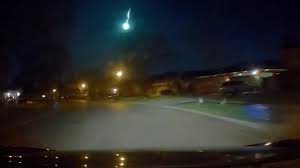
Fireball Meteor: The Science Behind the Spectacular Blazing Lights
Imagine glancing up at the crisp Canadian night sky and suddenly witnessing a blinding flash of light—brighter than the moon—streaking across the horizon in a matter of seconds. For many, this is their first encounter with a fireball meteor, one of nature’s most awe-inspiring celestial displays.
But what exactly is a fireball, and why do some shooting stars look like exploding fireworks while others are mere whispers of light? Let’s dive into the cosmic mechanics of these stunning events.
What Exactly is a Fireball Meteor?
In astronomical terms, not all “shooting stars” are created equal. To understand a fireball, we first need to understand the hierarchy of space debris:
- Meteoroid: A small piece of rock or metal drifting through space.
- Meteor: The streak of light we see when a meteoroid enters Earth’s atmosphere and burns up.
- Fireball: A meteor that is exceptionally bright—specifically, one that reaches an apparent magnitude of -4 or brighter (meaning it’s brighter than Venus).
- Bolide: A fireball that ends in a visible explosion or a sonic boom, often fragmenting into smaller pieces.
Why Do They Glow So Brightly?
The brilliance of a fireball meteor isn’t caused by the rock itself “burning” in the traditional sense, but by atmospheric friction. As the space rock enters Earth’s atmosphere at speeds ranging from 11 to 72 kilometres per second, it compresses the air in front of it.
This intense compression creates extreme heat, ionizing the surrounding gas and causing the meteor to glow intensely. The colour of the fireball can actually tell us what the rock is made of: green often indicates nickel or magnesium, while yellow suggests sodium.
Are Fireball Meteors Dangerous?
For the most part, no. The vast majority of fireball meteors are the size of a pebble or a grain of sand and vaporize completely before they ever hit the ground. However, when a larger object survives the descent, it becomes a meteorite.
While rare, larger bolides can create shockwaves that rattle windows. For more information on how Earth handles near-earth objects, you can visit the NASA Planetary Defense Coordination Office.
How to Spot and Report Sightings in Canada
Because Canada has vast stretches of dark skies, away from the light pollution of cities like Toronto or Vancouver, it is an ideal place for stargazing. If you are lucky enough to witness a fireball, here is what you can do:
- Note the Time and Location: Exact timing helps astronomers triangulate the object’s trajectory.
- Describe the Colour: Was it blue, green, or bright white?
- Report it: Share your sighting with local astronomical societies or check the Canadian Space Agency (CSA) for updates on celestial events.
Keep your eyes on the stars—the next fireball meteor could be just one blink away!
📰 You May Also Like