
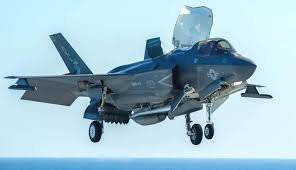
The Strategic Shift: F-35B Deployment in Japan
The U.S. Marine Corps has recently intensified its presence in the Western Pacific by deploying another squadron of F-35B fifth-generation fighters to Japan. This move is more than a routine rotation; it marks a critical transition in air power, as these advanced stealth jets replace the aging F-18C/D Hornet squadrons.
As Washington navigates an increasingly complex geopolitical landscape, the reliance on the F-35B is growing. This deployment is specifically designed to bolster defenses and maintain a competitive edge against technologically sophisticated adversaries, most notably China.
STOVL: The Tactical Edge of Vertical Landing
One of the most defining features of the F-35B is its Short Take-Off and Vertical Landing (STOVL) capability. While Marine Corps Air Station Iwakuni serves as a primary hub, the reality of modern warfare suggests that fixed bases are highly vulnerable to long-range missile strikes.
To mitigate this risk, the Marine Corps is implementing a strategy of dispersion. By utilizing STOVL, the F-35B can operate from smaller, less predictable locations, making it significantly harder for an enemy to neutralize the fleet in a single strike. However, the success of this “expeditionary” approach hinges on one critical factor: the ability to maintain a robust logistics and supply chain under active combat conditions.
The Trade-off: Stealth vs. Range
The F-35B is a marvel of engineering, serving as a high-tech sensor platform. Its advanced radar, electronic warfare suites, and data-fusion capabilities allow it to act as the “eyes and ears” of the battlefield, contributing far more than just kinetic firepower. But this versatility comes with significant compromises:
- Combat Radius: With a range of approximately 700 km, the F-35B struggles compared to the F-35A (1,000 km) and the Chinese J-20, which boasts a massive 2,000 km range.
- Payload: It carries a smaller internal weapons load than its A and C variants to accommodate the lift fan system.
- Flight Performance: In terms of pure agility and speed, it is often cited as the least performant of the 21st-century fighter types.
The High Price of Versatility
Innovation is rarely cheap. The F-35B is currently the most expensive fighter jet in serial production, costing nearly $140 million per aircraft—roughly 50% more than the F-35A. This financial burden is coupled with an intense maintenance schedule that poses challenges for forward-deployed units.
In a telling move in February 2025, the Marine Corps announced a 21% reduction in F-35B procurement. Analysts suggest this is a direct result of testing that revealed limitations in its suitability for Expeditionary Advanced Base Operations (EABO).
Conclusion: A Specialized Tool for a Complex Era
Despite its costs and range limitations, the F-35B remains an indispensable asset for the Lockheed Martin fleet. Its ability to operate from austere environments provides a layer of survivability that conventional jets simply cannot match, ensuring that the U.S. maintains a flexible and lethal presence in the vast expanse of the Pacific.



