
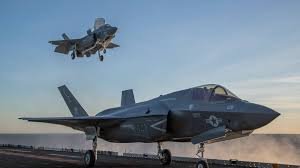
A Critical Security Lapse: How F-35 Stealth Technology Ended Up in Hong Kong
In a startling breach of military logistics, U.S. lawmakers are demanding urgent answers after reports revealed that sensitive components of the F-35 Lightning II—the world’s most advanced stealth fighter—were accidentally shipped to Hong Kong. This incident has ignited a firestorm of concern on Capitol Hill, as the region is now under the tight control of Beijing, a primary strategic adversary of the United States.
The Logistics Nightmare: From Australia to China
The mishap occurred during a transport operation involving parts bound for the United States for essential repairs. Originally departing from Australia, the shipment was inexplicably rerouted across the Pacific Ocean, landing in Hong Kong. This logistical error was reportedly handled by an intermediary acting on behalf of the defense giant Lockheed Martin.
While the specific reason for the diversion remains unclear, the implications are severe. The shipment reportedly included a cockpit canopy, a piece of equipment that is far more than just a window. It is coated with a sophisticated, transparent radar-absorbent material essential for the jet’s stealth capabilities, designed to make the aircraft nearly invisible to enemy radar.
Why This Matters: The Risk of Reverse Engineering
National security experts and congressional committees are alarmed for one primary reason: reverse engineering. If these components fell into the hands of Chinese intelligence, they could potentially:
- n
- Analyze the chemical composition of the stealth coating.
- Study the structural design of the cockpit for vulnerabilities.
- Develop countermeasures to better detect the F-35 in combat scenarios.
The Pentagon’s F-35 Joint Program Office has acknowledged the issue, stating they are working with U.S. authorities and industry partners to retrieve the unserviceable components and implement safeguards to prevent such a failure from happening again.
A Pattern of Supply Chain Failures
This incident highlights a deeper, systemic problem within the F-35 program’s vast and complex global supply chain. The program relies on a shared pool of spare parts distributed across multiple allied nations, including the U.K., Norway, and Poland.
However, oversight has been criticized as insufficient. A report from the Government Accountability Office (GAO) in 2023 revealed a shocking statistic: more than 1 million F-35 spare parts have gone missing over the past five years. The GAO noted that the Joint Program Office fails to track these parts in a real-time property system, leaving the record-keeping largely in the hands of prime contractors.
The $2 Trillion Question
With an estimated lifetime cost of nearly $2 trillion, the F-35 is on track to be the most expensive weapons program in history. Lawmakers are now questioning whether the program’s unprecedented scale has come at the expense of basic security and accountability.
As briefings continue among national security committees, the focus remains on whether the U.S. can secure its most guarded military secrets in an era of globalized logistics and intensifying geopolitical rivalry.



