
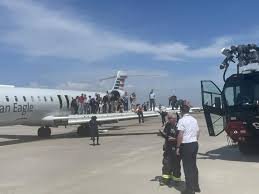
Emergency Landing: Navigating the Most Critical Moments in Aviation
For most travelers, a flight is a routine transition from one city to another. However, when the words “emergency landing” are announced over the intercom, the atmosphere in the cabin shifts instantly. While the thought of an unplanned descent is nerve-wracking, these events are where aviation technology and human expertise truly shine.
What Exactly Triggers an Emergency Landing?
An emergency landing isn’t always a cinematic disaster. In reality, pilots categorize these events based on urgency. Not every “emergency” means the plane is falling out of the sky; often, it is a proactive decision to ensure maximum safety.
- n
- Mechanical Failures: Issues ranging from engine malfunctions to hydraulic leaks.
- Medical Emergencies: When a passenger or crew member requires immediate hospitalization.
- Severe Weather: Unforeseen storm cells or volcanic ash clouds that make the original destination unreachable.
- Fuel Concerns: Rare instances where fuel levels are lower than required for a safe arrival at the intended airport.
n
n
n
n
The Pilot’s Protocol: Calm Amidst the Chaos
When a crisis occurs, pilots don’t rely on guesswork. They follow a strict set of Standard Operating Procedures (SOPs). The process generally follows a three-step hierarchy: Aviate, Navigate, Communicate.
- Aviate: The primary goal is to keep the aircraft stable and flying.
- Navigate: The crew identifies the nearest suitable airport or a safe landing strip.
- Communicate: The pilot contacts Air Traffic Control (ATC) to declare an emergency (often using the phrase “Mayday” or “Pan-Pan”), ensuring all other aircraft clear the path.
n
n
n
To learn more about the rigorous safety standards governing these operations, you can visit the Federal Aviation Administration (FAA), the gold standard for aviation safety.
The “Miracle” Factor: Training and Technology
Modern aircraft are designed with incredible redundancy. If one system fails, another takes its place. But the real hero is the training. Pilots spend hundreds of hours in high-fidelity simulators practicing every conceivable failure scenario.
A legendary example of this is the “Miracle on the Hudson,” where Captain Chesley Sullenberger successfully ditched US Airways Flight 1549 in the river after a bird strike. This event highlighted how a combination of quick thinking and rigorous training can save every soul on board.
Passenger Safety: What You Should Do
While the pilots handle the cockpit, your role as a passenger is crucial for a successful evacuation if necessary:
- n
- Listen to the Crew: Flight attendants are trained for exactly these moments. Follow their instructions without hesitation.
- Secure Your Seatbelt: Ensure it is tight across your hips to minimize impact during a hard landing.
- Brace Position: If instructed, assume the brace position to protect your head and torso.
- Leave Everything Behind: In an evacuation, seconds save lives. Do not try to retrieve luggage.
n
n
n
n
Conclusion
While the term emergency landing sounds terrifying, it is actually a testament to the safety-first culture of aviation. Through advanced engineering and relentless training, the aviation industry has turned potentially fatal accidents into manageable incidents, ensuring that even in the worst-case scenario, the priority remains the same: getting everyone home safely.



