
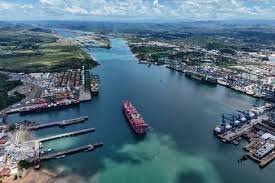
El Niño’s Impact: Severe Drought Forces New Restrictions on the Panama Canal
The Panama Canal, one of the world’s most critical maritime arteries, is facing a mounting crisis. Due to a severe drought fueled by the El Niño phenomenon, the canal’s operator has announced a mandatory reduction in the number of vessels permitted to transit the waterway.
The Crunch: New Transit Restrictions
As water levels in the artificial lakes that feed the canal continue to plummet, the Panama Canal Authority (ACP) has implemented a phased reduction in daily ship traffic to ensure the long-term sustainability of the waterway:
- n
- Starting September 3: Daily vessel capacity will drop from 36 to 34 ships.
- Starting September 15: The limit will further decrease to 32 ships per day.
These measures come as a response to a staggering 34% decrease in rainfall from May to August compared to historical averages. Experts warn that the ongoing El Niño weather pattern—characterized by the warming of surface temperatures in the Pacific Ocean—could further suppress rainfall in the coming months.
Global Economic Ripples and Supply Chain Chaos
The impact of these restrictions extends far beyond Panama. The canal handles approximately 5% of global maritime trade and nearly 40% of all US container traffic. For major retailers and energy companies trading between Asia and the United States, the canal is the preferred route to minimize costs and transit times.
With fewer slots available, the market is seeing unprecedented volatility. While most ships use reservations, the remaining slots are auctioned off. In a desperate bid to avoid bottlenecks, one shipping company recently paid a staggering $4 million USD for a single transit slot, compared to the previous average winning bid of $135,000.
A Human and Environmental Crisis
While the economic headlines focus on shipping and trade, there is a more pressing human element. The lakes that power the canal also provide essential drinking water for half of Panama’s 4.2 million residents. This creates a delicate balancing act between maintaining global commerce and ensuring the survival of the local population.
The crisis is not isolated to Panama. The broader Central American region is currently in the throes of a climatic emergency; for instance, the government of Honduras recently placed 80% of its territory under a drought alert.
What Happens Next?
The Panama Canal Authority has not ruled out further restrictions if rainfall does not increase. For global logistics managers, this means the search for alternative routes and the acceptance of longer transit times is no longer an option—it is a necessity.
As El Niño shapes up to be one of the strongest on record, the world is receiving a stark reminder of how climate volatility can disrupt the very foundations of global trade.



