
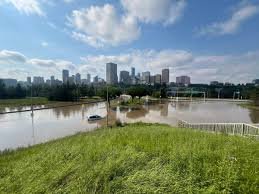
Edmonton Underwater: Historic Rainfall Shatters Records and Paralyzes the City
Edmonton has recently been the epicenter of a weather crisis, as a series of relentless severe thunderstorms transformed city streets into rivers and brought urban life to a grinding halt. For those monitoring the weather network Edmonton updates, the data paints a startling picture: the city is grappling with some of the most significant rainfall totals in nearly a century.
A Record-Breaking Summer of Rain
The scale of this weather event is unprecedented. According to data from Environment Canada, Edmonton recorded a combined 511 millimetres of rain throughout June and July. This marks the highest volume of rainfall the city has seen since 1953.
The onslaught began in June, which saw a record-breaking 260 mm of rain, smashing a 112-year-old record. While nearby Calgary remained surprisingly dry—receiving only about 14mm of rain in July—Edmonton became a focal point for severe storm cells, creating a stark climatic contrast within the province of Alberta.
Chaos in the Streets: Major Disruptions
The impact on the city’s infrastructure was immediate and severe. Three waves of heavy rainfall on a single Monday afternoon turned major thoroughfares into lakes, leading to several critical closures:
- n
- Transportation Hubs: The interchange of Connors Road, Scona Road, and 98 Avenue was shut down, cutting off vital access to the Low Level and James MacDonald bridges.
- Public Services: The Service Canada passport office at Canada Place was forced to close due to significant water damage and flooding.
- Tourism and Nature: The Muttart Conservatory had to suspend operations as flooded roads cut off access for visitors and staff.
- Transit Woes: The Valley Line southeast tracks were halted after a fallen tree blocked the way in the Strathearn area, causing massive delays for commuters.
When Nature Wins: From Concerts to National Parks
The weather’s volatility didn’t just affect commuters; it disrupted major events and natural landmarks. In a dramatic turn of events, approximately 31,000 fans at the Post Malone concert at Commonwealth Stadium had to seek shelter as fierce winds and sideways rain forced the show to end prematurely.
Further east, Elk Island National Park was forced to close its gates, as the combination of downed trees and flash flooding created hazardous conditions for guests.
Why is Edmonton Flooding So Severely?
Many residents are questioning why the city’s drainage system is struggling. Experts suggest a “perfect storm” of factors. The sheer volume of back-to-back storms has left the groundwater table completely saturated. With nowhere for the water to soak in, runoff is overwhelming the stormwater systems.
EPCOR, the city’s utility provider, has noted that the region desperately needs a prolonged period of dry weather to allow the infrastructure to recover and the ground to drain.
Quick Summary of the Impact
| Metric/Location | Impact/Detail |
|---|---|
| Total Rainfall (June/July) | 511 mm (Highest since 1953) |
| June Rainfall | 260+ mm (112-year record) |
| City Responses | 2,256 storm-related issues since July 1 |
As Edmonton continues to navigate this challenging season, residents are encouraged to check the City of Edmonton official updates for road closures and safety alerts. Stay safe and keep an eye on the skies!



