
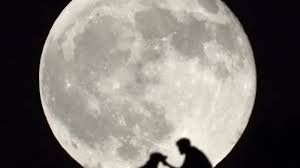
A Cosmic Dance in the Night Sky: The Sturgeon Moon Eclipse
Get your binoculars ready! This week, skywatchers are in for a celestial treat as the Sturgeon Moon coincides with a partial lunar eclipse. Whether you are a seasoned astronomer or just someone who loves a beautiful night sky, this event is a must-see spectacle.
What Exactly is a Partial Lunar Eclipse?
To understand what is happening, we first need to look at the mechanics of the cosmos. A lunar eclipse occurs when the Earth positions itself directly between the Sun and the Moon, casting its shadow—known as the umbra—across the lunar surface.
- Total Lunar Eclipse: Occurs when the entire lunar disk is engulfed by the umbra.
- Partial Lunar Eclipse: Occurs when only a portion of the Moon enters the Earth’s darkest shadow.
The event occurring this week is a partial eclipse, but it is an exceptional one. The Earth’s shadow will cover approximately 96% of the Moon, making it appear nearly total to the naked eye.
When and Where to Watch the Eclipse Today
If you are wondering about the timing for the eclipse today, here are the key moments to keep in mind (based on Miami time):
- Start of the Eclipse: Thursday at 10:34 p.m.
- Peak of the Eclipse: Friday at 12:13 a.m.
- Full Moon Peak: Friday at 12:18 a.m.
Fortunately, observers across North and South America will have a prime vantage point to witness most or all of this phenomenon during the late night and early morning hours.
The Visual Experience: Colors and Names
Unlike total eclipses, where the Moon often turns a deep blood-red or orange (due to the refraction of light through Earth’s atmosphere), this partial eclipse will look slightly different. According to NASA, because a small sliver of the Moon will remain illuminated by the Sun, it won’t acquire that deep, dark orange hue typical of total events.
This particular full moon is known as the Sturgeon Moon. This name originates from Algonquin-speaking indigenous peoples near the Great Lakes, where the lake sturgeon were abundantly fished during August. Other indigenous groups refer to it as the Black Cherry Moon or the Green Corn Moon.
Pro Tips for the Best Viewing Experience
One of the best parts about lunar eclipses is that, unlike solar eclipses, they are completely safe to view with the naked eye. You don’t need special filters or glasses.
To make the most of the experience, follow these suggestions:
- Escape Light Pollution: Find a local park or an open field away from bright city lights to enhance the contrast of the night sky.
- Use Equipment: While not necessary, a pair of binoculars can reveal more detail of the lunar craters as the shadow moves.
- Relax: Set up a hammock, grab a warm drink, and enjoy the cosmic show.
Looking Ahead: More Lunar Events in 2026
If you miss this event, don’t worry—the cosmos has more in store. There are four full moons remaining in 2026. Keep an eye out for November and December, which will feature Supermoons. These occur when the Moon is at its closest point to Earth in its orbit, appearing larger and significantly brighter than usual.
For real-time tracking of celestial events, we recommend checking Space.com to stay updated on the next big astronomical window.



