Power Outages and Safety: What’s Happening with PG&E in California?
Unexpected power failures can disrupt everything from home security to essential medical equipment. Recently, over 4,200 customers across nine California counties experienced planned power outages. According to the latest utility updates, these disruptions were not random failures but strategic moves to ensure public safety.
For those used to tracking energy disruptions via a DTE outage map in the Midwest or similar tools elsewhere, the California situation highlights a specific protocol known as the Public Safety Power Shutoffs (PSPS). But what exactly does this mean for the residents, and why is it necessary?
Why the PSPS Was Activated
Pacific Gas and Electric Co. (PG&E) implemented these shutoffs as a preemptive measure. The primary goal is to prevent utility equipment from accidentally sparking vegetation fires during high-risk weather conditions.
The current danger is driven by strong north winds, particularly those moving along and west of Interstate 5. When gusty winds knock down power lines into dry brush, the result can be catastrophic wildfires. By proactively cutting power, PG&E aims to eliminate this specific risk factor.
How to Stay Informed Using Outage Maps
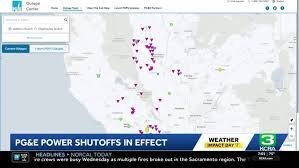
In an era of digital transparency, outage maps have become essential tools for homeowners and business owners. Whether you are monitoring the DTE outage map for Michigan updates or the PG&E map for California, these tools provide real-time data on:
- n
- Affected Areas: Which specific neighborhoods or counties are without power.
- Estimated Restoration Time: When the utility expects the grid to be back online.
- Cause of Outage: Whether the cut is planned (PSPS) or unplanned (equipment failure).
PG&E has warned that up to 5,000 customers could be impacted in total as weather conditions evolve. We strongly recommend checking the official utility map frequently to stay ahead of any changes in timing or location.
Essential Safety Tips During a Power Shutoff
If you find yourself in an area affected by a PSPS event, taking a few simple precautions can make a huge difference:
- Prepare Backup Power: Ensure your portable chargers are full and generators are fueled.
- Food Safety: Keep refrigerator and freezer doors closed to maintain cold temperatures.
- Stay Alert: Follow local emergency alerts and official weather reports via Ready.gov.
- Avoid Downed Lines: Never approach a fallen power line; assume it is live and dangerous.
By combining real-time data from an outage map with proactive safety planning, residents can navigate these challenging weather patterns with peace of mind.