
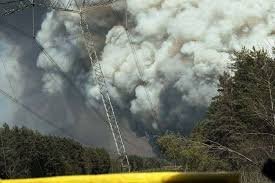
Drone Crash Sparks Massive Fire in Chernobyl Exclusion Zone: Environmental Risks and Challenges
The Chernobyl exclusion zone, a region already marked by one of history’s most devastating nuclear accidents, is facing a new crisis. A recent drone crash has ignited a massive forest fire, sending plumes of smoke across the landscape and raising urgent questions about radioactive contamination and environmental safety.
The Scale of the Blaze: A Growing Threat
According to reports from the Chornobyl Radiation and Ecological Biosphere Reserve (CREBR), the fire broke out south-east of the town of Chernobyl, near the former cooling ponds of the nuclear power plant. While initial reports suggested the fire spanned approximately 12 square kilometres, recent satellite imagery indicates the destruction may be far more extensive, potentially covering up to 24.4 square kilometres.
The emergency response has been massive, with over 300 personnel and 75 pieces of equipment deployed to battle the flames. However, the operation is fraught with danger.
Why Containing the Fire is So Difficult
Firefighters are not just battling heat and smoke; they are fighting a complex set of environmental and military obstacles:
- n
- Extreme Weather: Persistent dry conditions and strong winds have allowed the fire to spread rapidly.
- Land Mines: The presence of land mines in certain sectors makes some areas completely inaccessible to ground crews, forcing them to prioritize other zones.
- Radiation Exposure: Personnel working on the fire line are breathing air with high concentrations of radionuclides, requiring strict health monitoring and body checks after every shift.
n
n
n
Is There a Risk of Radioactive Contamination?
One of the primary concerns during any fire in the exclusion zone is the release of radioactive particles into the atmosphere. Experts, including Olena Burdo from the Institute for Nuclear Research in Kyiv, suggest that while the fire is serious, the risk of significant contamination extending outside the exclusion zone remains minimal.
Denys Vyshnevskiy of the CREBR noted that radiation levels 5 to 10 kilometres away from the fire remain normal, providing some relief to nearby populations.
A Zone Under Constant Pressure
This incident is not an isolated event but part of a broader pattern of instability in the region. The exclusion zone is frequently used as a flight path for Russian drones targeting Kyiv and other Ukrainian cities. This vulnerability was highlighted last year when a drone struck the New Safe Confinement—the massive shield protecting the ruins of the 1986 reactor.
Fortunately, that previous strike did not cause a structural collapse, but the current fire underscores how fragile the stability of this radioactive wasteland truly is. For more information on global nuclear safety standards, you can visit the International Atomic Energy Agency (IAEA).
Looking Ahead
As emergency crews continue their work, there is a glimmer of hope that forecasted rains will help extinguish the remaining hotspots. However, the event serves as a stark reminder that the legacy of Chernobyl requires constant vigilance, especially in an era of modern aerial warfare.



