
Dramatic Aircraft Emergency at Huntington State Beach: A Story of Quick Thinking and Survival
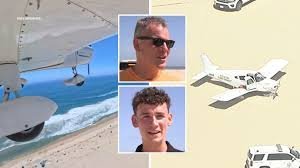
What started as a routine flight quickly turned into a fight for survival this past Monday. In a heart-stopping sequence of events, a small aircraft was forced to make an emergency landing at Huntington State Beach, leaving onlookers stunned and the passengers shaken but safe.
The incident involved a Piper PA-28 Cherokee, which experienced a critical engine failure shortly after takeoff from Santa Ana’s John Wayne Airport. The pilot, Mike Bremner, and his 16-year-old nephew, Griffin, were en route to Van Nuys when the unexpected occurred.
The Moment of Crisis: “Mayday, Mayday, Mayday”
Just as the plane reached an altitude of approximately 1,000 feet, the engine began to falter. For any pilot, this is a worst-case scenario, but Bremner immediately shifted into survival mode. His communication with the control tower captured the urgency of the situation:
“Cherokee 4521 Romeo, Mayday, Mayday, Mayday. We’ve lost our engine… we will be putting it down on the beach.”
The aircraft touched down on the sand near Magnolia Street and Pacific Coast Highway, just south of the pier—an area currently buzzing with activity due to the 2026 U.S. Open of Surfing. Fortunately, neither the passengers nor any bystanders on the beach were injured during the landing.
Trusting the Training: How the Pilot Saved His Nephew
For Mike Bremner, the difference between a tragedy and a miracle was rigorous training. He explained that when an engine fails, pilots rely on muscle memory and a strict set of emergency protocols.
- n
- Immediate Diagnostics: Bremner performed a rapid check—pumping the accelerator and switching fuel tanks—to attempt a restart.
- Optimizing Glide: Realizing the engine was dead, he maintained a specific airspeed to ensure the plane could glide the maximum distance possible.
- Strategic Landing: With light winds and a wide-open shoreline in sight, he steered the Piper PA-28 toward the sand for the safest possible impact.
“All pilots train for a forced landing,” Bremner noted. “But you never really know what you’re going to do until it happens.” For more information on aviation safety protocols, you can visit the Federal Aviation Administration (FAA) official website.
A Terrifying First Flight
For 16-year-old Griffin Bremner, visiting from Canada, this was his first time flying with his uncle. The experience was far from the scenic tour he likely expected. Griffin recalled the moment the plane began to “stutter” and the propeller slowed down, followed by the chilling words: “Griffin, we’re going down.”
Despite the fear, Griffin took the experience in stride, even picking up a rock from under the wheel as a souvenir of the day he survived an aircraft emergency.
Investigation and Aftermath
While the duo describes the event as an “unexpected trip to the beach they will never forget,” the authorities are taking the matter seriously. The FAA is currently investigating the mechanical failure of the engine to prevent similar occurrences in the future.
This incident serves as a powerful reminder of the importance of pilot training and the unpredictable nature of general aviation. We are grateful that quick decision-making turned a potential disaster into a story of survival.



