
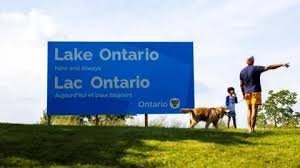
Lake Ontario or Lake America? Doug Ford Stands His Ground Against Trump
In a striking display of provincial defiance, Ontario Premier Doug Ford has responded to Donald Trump’s attempt to rename one of the world’s most iconic bodies of water. Following a controversial executive order from the U.S. President, Ford has installed a massive sign along the Canadian shoreline with a clear, unwavering message: “Lake Ontario. Now and Always.”
The conflict erupted after Donald Trump signed a decree seeking to rename the shared waterway as “Lake America.” The move was accompanied by a series of provocative AI-generated videos shared by the U.S. President, depicting a surreal version of the shoreline where Lake Ontario signs are kicked over and replaced with “Welcome to Lake America” placards.
A Diplomatic Clash Fueled by Trade Wars
This symbolic battle over nomenclature is not happening in a vacuum. The tension is a direct result of a collapse in trade negotiations between the two North American neighbors. The U.S. has recently imposed aggressive 50% tariffs on approximately $20 billion (C$28 billion) of Canadian goods.
In response, Canada has announced a “dollar for dollar” counter-tariff strategy, set to be implemented next month. Premier Ford believes the renaming attempt is a targeted provocation, stating that Trump’s actions stem from a dislike of “Ontario and Canada standing up for ourselves.”
The Surreal Use of AI in Diplomacy
Beyond the executive orders, the dispute has taken a bizarre turn on social media. Trump posted AI-generated content featuring Canada geese sporting the president’s signature hair and carrying rifles while patrolling the borders of the newly dubbed “Lake America.”
While the U.S. President has broad discretion over how domestic landmarks are recognized within American borders, Canadian officials have been quick to dismiss the move, noting that international borders and shared waters cannot be unilaterally renamed by one nation.
Historical Context and the ‘Gulf of America’ Precedent
The naming of the Great Lakes is deeply rooted in history. Four of the five lakes—Ontario, Huron, Michigan, and Erie—derive their names from indigenous words, while Lake Superior comes from an anglicized French term. For many, the attempt to rename them is seen as an erasure of this cultural heritage.
This is not the first time the U.S. administration has attempted such a move. In 2025, a similar order changed the Gulf of Mexico to the “Gulf of America.” That decision was widely rejected by Mexico, leading to a legal and digital standoff with Google Maps, which ended up showing different names depending on where the user was located.
Key Takeaways from the Confrontation
- n
- Provincial Defiance: Doug Ford’s installation of the “Now and Always” sign serves as a physical marker of Canadian sovereignty.
- Economic Fallout: The naming dispute is a symptom of a larger trade war involving billions in tariffs.
- International Law: Experts agree that one country cannot unilaterally rename a shared body of international water.
- Political Messaging: The use of AI-generated propaganda marks a new, volatile era of diplomatic communication.
As the U.S. Department of the Interior works to update domestic records via the Geographic Names Information Service, Canada remains steadfast. As Prime Minister Mark Carney echoed: “Things must be called by their name, and this lake is called Lake Ontario—today and forever.”
For more information on the geography and protection of the Great Lakes, you can visit the Alliance for the Great Lakes.



