Did the Tang Dynasty Actually Exist? The Wild Conspiracy Shaking China’s Internet
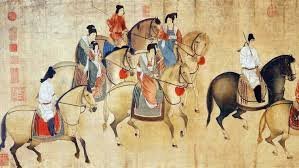
Did the Tang Dynasty Actually Exist? The Wild Conspiracy Shaking China’s Internet
Imagine waking up to find a significant portion of your country’s history being dismissed as a complete fabrication. For many in China, this surreal scenario is currently playing out online. A vocal and growing corner of the internet is claiming that the Tang Dynasty—one of the most influential periods in human history—never actually happened.
The Tang Dynasty (618 AD to 907 AD) is renowned for its territorial expansion, flourishing international trade, and a golden age of art and culture that echoed far beyond China’s borders. To suggest it was a myth is comparable to claiming the Magna Carta is a work of fiction or that the American Civil War never occurred. Yet, this narrative is gaining traction among the “very online” population, creating a significant headache for the ruling Communist Party.
The Spark: From Astrological Data to Viral Hoaxes
The controversy reportedly ignited in May when a history influencer named Qiao Yu released a video utilizing baffling astrological data to “prove” that the Tang Dynasty was a hoax. While the logic was outlandish, the reach was massive.
The ripple effects of this claim moved quickly from digital screens to real-world chaos:
- n
- Tourism Disruptions: Reports emerged of individuals calling the tourism bureau in Xi’an (the ancient Tang capital), demanding the city shut down its historical sites because they were based on a lie.
- Social Media Explosion: The hashtag “the Tang dynasty doesn’t exist” amassed tens of millions of views on Weibo, China’s equivalent to X.
- Educational Confusion: Parents have expressed concern that children are beginning to doubt established historical facts learned in school.
The Hidden Motives: Nationalism and Rebellion
Why would anyone believe such a fallacy? Experts suggest the motives are a complex blend of ethnic nationalism and systemic frustration. Some Chinese nationalists have criticized the Tang Dynasty because its founding emperor was not of the Han ethnic group, which comprises the majority of China’s population. Qiao Yu’s claim suggests that the subsequent Song Dynasty (which was of Han origin) actually began much earlier, effectively erasing the Tang from the timeline.
Beyond ethnicity, there is a sociological element. For young people facing a slowing economy and fierce job competition, questioning the Tang Dynasty may be a form of rebellion. As one Beijing resident, Callum, noted, it is a way to attack established authorities and “experts” by claiming to possess a hidden truth.
The State’s Response: Fighting ‘Historical Nihilism’
For the Chinese Communist Party (CCP), this isn’t just a harmless internet trend; it is a threat to national identity. The state has labeled this trend as “historical nihilism”—a term used to describe any research or discussion that challenges the official party version of history.
Professor William Kirby of Harvard University emphasizes that the Tang Dynasty is an undeniable fact of history, describing it as both a Chinese and an inner Asian dynasty. The state media, including the People’s Daily, has issued stern warnings, stating that doubting national history weakens “cultural confidence” and leaves the nation “like a tree without roots.”
Conclusion: The Final Word
Under the leadership of Xi Jinping, the grip on historical narratives has tightened. The Tang era serves as a symbol of China’s past glory and openness to the world—a narrative the government is keen to preserve to project a unified and continuous national identity.
By mid-August, the state acted decisively: Qiao Yu’s accounts were blocked, videos were scrubbed, and search queries regarding the dynasty’s existence now redirect users to content condemning the conspiracy. As the People’s Daily concluded, the Golden Age of the Tang remains one of the most “dazzling chapters” of a 5,000-year-old civilization.
📰 You May Also Like