
html
December’s Dazzling Display: Your Guide to Upcoming Meteor Showers & Celestial Wonders
As the year draws to a close, the cosmos opens up a breathtaking spectacle for sky-watchers. If November’s aurora displays left you craving more, December is poised to deliver an unforgettable series of celestial events. From powerful upcoming meteor showers to close planetary encounters and a dazzling supermoon, the night sky is truly putting on a show. Get your binoculars ready, find a dark spot, and prepare to be amazed by these cosmic highlights.
A Month of Wonders: What to Watch For
December’s sky is packed with phenomena visible to the naked eye, offering incredible opportunities for both seasoned astronomers and casual stargazers. Here’s your ultimate guide to the best night-sky sights:
The Grand Finale: December’s Supermoon
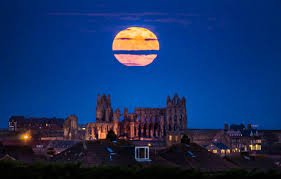
Mark your calendars for the final full moon of the year, which is also a glorious supermoon! This occurs when the Moon reaches its full phase simultaneously with its closest approach to Earth, known as perigee. The result? A lunar disk that can appear up to 14 percent larger and 30 percent more luminous than usual. For the most dramatic view, catch it as it rises around sunset in the eastern sky, where the ‘moon illusion’ makes it appear even more immense against the horizon and terrestrial objects.
Catching the Swift Planet: Mercury’s Greatest Elongation
Mercury, often elusive due to its proximity to the sun, will be perfectly positioned for viewing on December 7th. On this day, it reaches its greatest elongation, offering its widest visible separation from the sun. This is your prime opportunity to spot the ‘swift planet’ without the sun’s obscuring glare. Look for it about an hour before sunrise above the eastern horizon, with Venus as its luminous companion.
The Star of the Show: The Geminid Meteor Shower
Prepare for cosmic confetti! The Geminid meteor shower, often hailed as one of the year’s best, peaks overnight from December 13th to 14th. Historically, this shower is incredibly prolific and reliable, capable of producing anywhere from 60 to 120 meteors per hour under ideal, dark-sky conditions. This year, conditions are exceptionally favorable, with a roughly 30-percent illuminated waning crescent moon not rising until around 2 a.m. This means hours of uninterrupted meteor-scouting for astronomy enthusiasts.
Watch for the Geminids’ characteristic yellow-tinged streaks and the occasional brilliant flashes known as fireballs, which can appear anywhere across the night sky. For more detailed information on viewing meteor showers, check out resources like NASA’s Skywatching Guide.
A Cosmic Nursery: The Orion Nebula (Messier 42)
December is prime time to peer into the heart of the Orion Nebula, a magnificent star-forming region of dust and gas. Also known as Messier 42, it’s one of the faintest objects visible to the naked eye. While binoculars will enhance the view, a telescope will reveal its signature features, including enchanting wisps of blue, pink, and green. The view is best on December 15th, when it reaches its highest point in the night sky around midnight. Locate this luminous stellar nursery just below Orion’s distinctive three-star belt.
An Interstellar Visitor: Comet 3I/ATLAS
A rare guest from beyond our solar system, Comet 3I/ATLAS, will make its closest approach to Earth on December 19th, passing approximately 170 million miles away. This seven-mile-wide comet is only the third known interstellar object to ever traverse our solar system. Astronomers theorize it originated from a distant star system within the Milky Way and could be over seven billion years old. While not visible to the naked eye, those with telescopes or observatory access can track its journey. Look for it near the constellation Leo.
Winter Solstice & Aurora Chasing
December 21st marks the winter solstice in the Northern Hemisphere, bringing the year’s shortest day and longest night – a welcome treat for aurora chasers. While predicting a spectacular aurora display like November’s is challenging, we remain in a period of solid aurora odds as we are still on the tail end of the sun’s roughly 11-year peak in activity, known as solar maximum. For tips on tracking geomagnetic activity and planning your next aurora chase, reputable astronomy sites offer comprehensive guides.
The Quiet Spectacle: Ursid Meteor Shower
Following the Geminids, the Ursid meteor shower offers a more subtle but equally rewarding experience. Peaking overnight from December 21st to 22nd, the Ursids are not as flashy as their counterparts like the Geminids or Perseids, but they are certainly worth scouting, especially with this year’s dim, nearly new crescent moon. Under dark skies, you could spot up to 10 meteors per hour. The bulk of the activity occurs just before dawn, when the Ursa Minor radiant is at its highest point.
Planetary Pairings: Moon & Saturn
On the night of December 26th, prepare for a delightful pairing as the waxing crescent moon and Saturn appear within roughly four degrees of each other – about three finger-widths. Look for this beautiful duo in the southern sky after sunset. They will journey across the sky together until approximately midnight before setting below the western horizon.
Jupiter’s Grand Return: Gearing Up for 2026
Though its official opposition doesn’t occur until January 10th, 2026, Jupiter will begin to brighten steadily from late December onwards. Opposition is when Earth passes directly between the sun and Jupiter, making the gas giant appear larger and more luminous than usual. Jupiter rises above the northeast horizon soon after sunset and will remain gloriously visible all night, hinting at the spectacular views to come in the new year.
Get Out and Gaze!
December offers an unparalleled opportunity to connect with the cosmos. Whether you’re tracking upcoming meteor showers, marveling at a supermoon, or exploring distant nebulae, the night sky promises wonders for everyone. Grab a warm blanket, a hot drink, and embark on your own celestial adventure!



