
The Melting North: A New Frontier of Geopolitical Tension
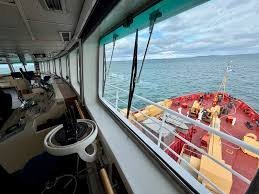
For nearly four decades, Captain Michel Dufresne of the Canadian Coast Guard icebreaker Des Groseilliers has navigated the treacherous waters of the North. But as he observes from the bridge, the Arctic he knows is vanishing. Global warming is accelerating, transforming the Northwest Passage from an impassable wall of ice into an increasingly navigable corridor.
This environmental shift is not just a climate concern; it is a strategic crisis. As the ice recedes, Canada’s claim to the region is facing unprecedented scrutiny from global powers, including Russia and China. Furthermore, recent diplomatic friction with the United States has highlighted the urgent need for Canada to assert its sovereignty from “coast to coast to coast.”
The Great Debate: Internal Waters or International Strait?
One of the most contentious points of friction is the legal status of the Northwest Passage. While CTV News reports that Canada maintains the passage consists of internal waters under absolute Canadian sovereignty, the United States argues it is an international strait. This disagreement makes the region a strategic flashpoint, necessitating a stronger physical and military presence.
A Generational Shift in Defence
Under the leadership of Prime Minister Mark Carney, the Canadian government has pivoted from a “piecemeal” approach to a comprehensive strategy. Key initiatives include:
- n
- Massive Investment: A commitment of over $40 billion over the next decade dedicated to Arctic defence, infrastructure, and security.
- Structural Realignment: The official transfer of the Canadian Coast Guard from Fisheries and Oceans Canada to the Department of National Defence to streamline maritime coordination.
- Modernizing the Fleet: The National Shipbuilding Strategy is underway to replace aging vessels like the Des Groseilliers with two polar icebreakers and six program icebreakers.
n
n
n
Exercise Arctic Ghost: Strengthening the Northern Shield
To demonstrate its capabilities, the Canadian Coast Guard is currently engaged in Exercise Arctic Ghost. This high-stakes drill involves a joint operation between the Des Groseilliers, the Royal Canadian Navy’s newest patrol vessel, HMCS Robert Hampton Gray, and the RCMP.
According to Maj.-Gen. (Ret’d) Scott Clancy, former director of operations for Norad, a “whole-of-government approach” is the only way to maintain sovereignty. “If you are not there… your lack of presence is ceding your sovereignty to someone else,” Clancy warns.
The Human Cost of Progress
While the arrival of new technology is essential for security, it comes with an emotional price. For Captain Dufresne, the Des Groseilliers—which entered service in 1982—is more than just a ship; it is a lifelong companion. While he welcomes the modernization, he admits that saying goodbye to the vessel will be a “pinch in the heart.”
As Canada continues to deploy icebreakers and crews throughout the Arctic season (June to November), the message to the world is clear: the North is not an uncovered territory. It is Canadian soil, and Canada intends to keep it that way.
For more information on Canada’s northern strategies, visit the Official Government of Canada Arctic and Northern Policy Framework.



