
Controversy Over the Iran Flag: Politics and Passion Clash Ahead of FIFA World Cup 2026
As the world gears up for the 2026 FIFA World Cup, the intersection of sports and geopolitics has taken a visible and contentious turn in the streets of Seattle. A public display of the Iran flag, intended to celebrate the diverse nations participating in the tournament, has become a flashpoint for political unrest and emotional divide.
Vandalism in Seattle: A Symbol Defaced
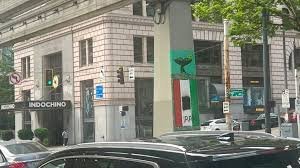
In downtown Seattle, specifically at the intersection of 5th Avenue and Stewart Street, a row of international flags was painted under the city monorail to welcome the global football community. However, the official flag of the Islamic Republic of Iran was recently targeted. The central red emblem—a stylized representation of “Allah”—was completely covered in black paint, with the word “Iran” scribbled underneath.
This act of defacement comes just as the city prepares to host a high-stakes match between Iran and Egypt at Seattle Field (Lumen Stadium). The vandalism highlights a deep-seated tension within the Iranian diaspora and beyond, where the national flag is viewed not just as a sporting symbol, but as a political statement.
The Battle of the Banners: Two Flags, Two Narratives
The controversy extends beyond street art and into the legal arena. A significant divide exists between the current official Iran flag and the pre-revolutionary version, known as the Lion and Sun flag.
- n
- The Islamic Republic Flag: The current official banner, which many protesters associate directly with the government in Tehran.
- The Lion and Sun Flag: A symbol used prior to 1979, now embraced by resistance groups as a beacon of freedom and defiance against the current regime.
FIFA, maintaining its strict Stadium Code of Conduct, has banned the pre-revolutionary flag, classifying it as a political symbol. This decision was recently upheld by Judge Curtis A. Kin in a Los Angeles court, who ruled that while free speech is sacred, private actors (like FIFA) have the right to regulate their property and events in a reasonable manner.
Divided Loyalties: Soccer vs. Politics
The emotional weight of these symbols was on full display during Iran’s recent match against New Zealand. While some fans cheered for their national team, others booed the national anthem, creating an atmosphere of intense volatility.
Outside the stadiums, the divide is even sharper. Some supporters argue for the separation of sports and politics, painting their faces in red and green to show pride in their heritage. Conversely, protesters argue that the national team is synonymous with the government, claiming the players are extensions of the state’s image.
A Global Stage for Local Struggles
The incidents in Seattle and Southern California—home to one of the largest Iranian communities outside of Iran—demonstrate that the 2026 World Cup will be more than just a tournament. It serves as a global stage where the Iran flag becomes a catalyst for conversations about human rights, identity, and the struggle for political change.
As the tournament approaches, the clash between those who see a sports team and those who see a government regime continues to intensify, proving that on the pitch, the game is rarely just about football.



