
Clash in the Strait of Hormuz: US and Iran on the Brink as Tensions Escalate
The geopolitical atmosphere in the Middle East has reached a boiling point. The Strait of Hormuz, one of the world’s most critical maritime chokepoints, has once again become a battleground for power, precision, and political brinkmanship between the United States and Iran.
From high-tech naval intercepts to tense diplomatic cables relayed through Pakistani mediators, the current escalation threatens not only regional stability but the very flow of global commerce. Here is a comprehensive look at the current state of the conflict.
Military Firepower: The Battle of the Destroyers
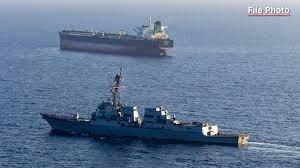
In a recent high-stakes encounter, three US Navy guided-missile destroyers—the USS Truxtun, USS Rafael Peralta, and USS Mason—successfully transited the Strait of Hormuz while under direct fire. According to US Central Command (CENTCOM), the warships fended off a multi-pronged attack consisting of drones, missiles, and fast-attack boats.
President Donald Trump described the engagement in vivid terms, noting that the Iranian attackers were “completely destroyed,” while the US assets remained unscathed. These Arleigh Burke-class destroyers are the workhorses of the US fleet, equipped with an arsenal designed for total dominance:
- n
- Standard Missiles: High-end systems capable of intercepting ballistic and cruise missiles.
- Sea Sparrow: Specialized for short-range aerial threats.
- Phalanx CIWS: A radar-guided 20mm Gatling gun acting as a last-resort defense, firing up to 4,500 rounds per minute.
- 127mm Bow Gun: Primary armament for engaging surface targets like fast-attack boats.
Diplomacy vs. Aggression: The Search for a Deal
While the waters are turbulent, a precarious diplomatic game is being played behind the scenes. President Trump has hinted that a comprehensive proposal to end the conflict is on the table—one that goes far beyond a simple “one-page offer.” The core of the US demand? The total abandonment of Iranian nuclear ambitions.
However, the path to peace is riddled with obstacles:
- n
- Iranian Response: Tehran is currently reviewing messages relayed through Pakistani intermediaries, though no final agreement has been reached.
- International Pressure: The US is coordinating with the European Union, with Ursula von der Leyen confirming a shared goal: ensuring Iran never possesses a nuclear weapon.
- Global Mediation: Brazilian President Luiz Inácio Lula da Silva has offered to mediate, cautioning that an invasion of Iran could cause more damage than Washington realizes.
The Global Economic Risk: Shipping in Peril
The conflict isn’t just about missiles; it’s about money and energy. The Strait of Hormuz is vital for global oil supplies, and any disruption has immediate worldwide repercussions.
Recent reports indicate a alarming trend: commercial vessel traffic has plummeted to one of its lowest points in history. Data shows a surge in GPS “spoofing,” where ships appear in false locations, making navigation hazardous and unpredictable. Furthermore, Iran has attempted to impose new protocols and “tolls” on ships crossing the strait, a move the US Ambassador to the UN, Mike Waltz, describes as a threat to the entire world.
The UAE: The Unseen Frontline
While the focus remains on the US and Iran, the United Arab Emirates (UAE) has emerged as a primary target. The UAE Ministry of Defense has reported ongoing engagements with Iranian missiles and UAVs (drones). Despite previous declarations of safe airspace, the UAE has sustained more incoming fire over the last two months than any other nation in the region.
Final Thoughts: A Fragile Ceasefire
Is the ceasefire still in effect? President Trump claims it is, describing recent strikes as a “love tap.” Iran, conversely, views these actions as blatant violations. As the world watches, the line between a negotiated peace and a full-scale regional war remains razor-thin. One thing is certain: the Strait of Hormuz remains the most volatile square mile on the planet.



