
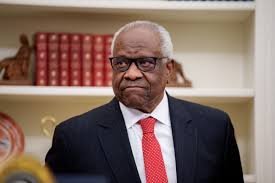
A Decades-Old Legal Battle: Clarence Thomas and the Quest for Religious Freedom in Education
For over twenty years, Justice Clarence Thomas has held a grudge against a specific Supreme Court precedent: Locke v. Davey. This 2004 ruling allowed states to deny public scholarship funding to students pursuing degrees in devotional theology, arguing that such a restriction didn’t violate the First Amendment. Now, a new legal challenge may finally give Justice Thomas the opportunity to turn his long-standing dissent into the law of the land.
The Catalyst: Bethany Hall’s Legal Fight
The current spark for this potential legal shift is a petition filed by Bethany Hall, a student at Liberty University in Virginia. Hall’s journey is a poignant example of the conflict between state funding and religious calling. Originally a music education major, Hall received the Virginia Tuition Assistance Grant (VTAG). However, after feeling “God’s call,” she switched her major to Youth Ministries—and subsequently to Christian Leadership and Music & Worship.
The result? Virginia immediately revoked her grant, citing that degrees providing religious training are ineligible for VTAG funding. Hall argues that excluding her solely based on the religious nature of her studies is a direct violation of the First Amendment’s Free Exercise Clause.
Why Clarence Thomas is Central to this Case
Justice Clarence Thomas has been one of the most consistent critics of the Locke v. Davey decision. During the original 2004 case, Thomas joined Justice Antonin Scalia in a fierce dissent, arguing that when a state creates a broadly available benefit, singling out theology for exclusion constitutes unconstitutional discrimination.
Thomas’s opposition didn’t stop in 2004. In more recent landmark cases, he has repeatedly signaled that the reasoning behind Locke is flawed:
- n
- Trinity Lutheran Church v. Comer (2017): Thomas described the endorsement of discrimination against religion as “troubling.”
- Espinoza v. Montana Department of Revenue (2020): He argued that the Court had incorrectly interpreted the Establishment Clause.
The Legal Landscape: A Shift Toward Religious Liberty
The current Supreme Court has shown a marked trend toward expanding protections for religious organizations and individuals. Legal experts suggest that the reasoning used in Locke v. Davey has been systematically undermined by newer precedents like Carson v. Makin.
According to Seth Chandler, a Law Foundation Professor at the University of Houston Law Center, the lower courts have practically “begged” the Supreme Court to take this case. While Justice Thomas and Justice Neil Gorsuch are seen as certain votes to overturn Locke, the real “wild card” remains Chief Justice John Roberts, who has weakened the precedent in the past but stopped short of killing it entirely.
What is at Stake for the United States?
If the Supreme Court decides to hear Hall’s appeal and chooses to overrule Locke v. Davey, the ripple effects will be felt across the country. Several states currently maintain restrictions on scholarship funding for ministry programs, including:
- n
- Alabama, Florida, and Ohio
- Illinois, Michigan, and Minnesota
- New Jersey, New Mexico, Oregon, and South Carolina
A reversal would force these states to either fund theology degrees equally with other majors or dismantle their aid programs entirely to avoid funding religious training—though the latter is seen as politically unlikely.
For those interested in the evolution of constitutional law, the official Supreme Court of the United States website provides updates on pending petitions and oral arguments that could shape the future of religious liberty in American education.
Conclusion
Whether this case results in a historic reversal remains to be seen, but it places Clarence Thomas at the center of a defining moment for the First Amendment. If the court grants certiorari, we may be witnessing the final chapter of Locke v. Davey and a new era for religious vocational studies in the U.S.



