
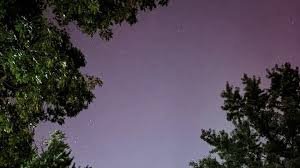
Celestial Spectacle: NOAA Predicts Stunning Northern Lights and Partial Lunar Eclipse Over Michigan
Prepare your telescopes and cameras! Michigan is about to witness a rare and breathtaking celestial double feature. According to recent data from NOAA, a combination of solar activity and lunar alignment is set to transform the night sky into a vibrant canvas of light and shadow.
The Return of the Aurora Borealis: What NOAA is Predicting
A powerful solar flare has triggered a series of geomagnetic disturbances, putting Michigan on high alert for the Aurora Borealis, or Northern Lights. The NOAA Space Weather Prediction Center (SWPC) has issued a G1 geomagnetic storm watch for Thursday night, August 27.
For those tracking the technical side, NOAA expects a Kp index of 5, which indicates a moderate disturbance in the Earth’s magnetic field. This is often the threshold where the Northern Lights become visible at lower latitudes. Furthermore, a G2 geomagnetic storm watch has been issued for Friday, August 28, driven by Coronal Mass Ejections (CMEs) that departed the sun on August 25.
Where to watch: While the Upper Peninsula will have the best vantage point, residents across the northern parts of the state should keep a close eye on the horizon.
A Rare Lunar Event: The Partial Lunar Eclipse
Adding to the excitement, a partial lunar eclipse will coincide with the solar activity. This isn’t just any eclipse; approximately 96% of the moon will be obscured by Earth’s shadow, creating a dramatic visual effect.
- n
- Start Time: August 27 at 9:23 p.m.
- Peak Totality: August 28 at 12:12 a.m.
- End Time: August 28 at 3:01 a.m.
The Science Behind the Magic
But why does the sky change color? According to NASA, the ethereal colors of the aurora depend on the interaction between solar wind electrons and atmospheric gases:
- n
- Greenish-Yellow: The most common hue, caused by oxygen molecules.
- Red: Also produced by oxygen, but at different altitudes and energy levels.
- Blue: Generally the result of nitrogen being excited by solar particles.
Pro Tips for the Best Viewing Experience
To make the most of this cosmic event, follow these expert suggestions:
- Seek Dark Skies: Head to one of Michigan’s designated dark sky areas to minimize light pollution and maximize visibility.
- Use Technology: If the lights seem faint to the naked eye, switch your smartphone camera to Night Mode. Hold the phone steady for a few seconds; the sensor often picks up colors that the human eye might miss.
- Check the Weather: Look for clear, dry skies to ensure an unobstructed view of the lunar eclipse and the dancing auroras.
Whether you are an astronomy enthusiast or just looking for a magical night out, this window of opportunity provided by NOAA‘s forecasts is not to be missed. Get outside and witness the universe in motion!



