
The High-Stakes Race for Canada’s New Submarine Fleet: Hanwha vs. TKMS
Canada is on the verge of making one of the most significant military investments in its history. The mission? Replacing an aging submarine fleet with cutting-edge technology to secure its vast coastlines. But this isn’t just a typical government procurement process; it has evolved into a high-profile clash of corporate strategies, geopolitical interests, and unprecedented marketing blitzes.
A Battle of Strategies: Loud Marketing vs. Silent Diplomacy
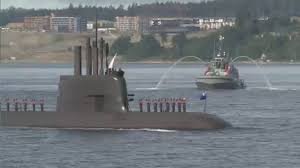
In the world of naval defence, submarines are designed to be invisible. However, the competition for the Canadian contract has been anything but quiet. South Korean manufacturer Hanwha has completely disrupted the status quo, launching a massive advertising campaign that has plastered Canadian airports and TV screens with images of the KSS-III submarine.
This aggressive approach caught rivals off guard. Oliver Burkhard, CEO of the European leader TKMS, described the strategy as “nuts,” noting that traditional submarine makers from France, Spain, or the UK typically pitch directly to governments, not the general public. While Hanwha aims for brand recognition and public pressure, TKMS has played a more traditional, behind-the-scenes game of diplomacy and engineering precision.
Comparing the Titans: KSS-III vs. 212CD
While the Canadian Navy has indicated that either model would meet its needs, the two vessels offer very different advantages:
- n
- Hanwha KSS-III (South Korea): A larger, more spacious vessel designed for endurance. Its standout feature is the ability to vertically launch ballistic or cruise missiles, providing a strategic strike capability that its competitor lacks.
- TKMS 212CD (Germany): A masterpiece of stealth engineering. Featuring a unique diamond-shaped hull, the 212CD is designed to be nearly invisible to sonar. Its biggest selling point is interoperability, as it is the same model being adopted by other NATO allies like Norway.
The “Canadian Twist”: More Than Just Boats
In a move typical of Canadian procurement, the federal government has looked beyond naval capabilities. Industry Minister Mélanie Joly has hinted that the winning bidder should provide economic offsets, such as opening new car plants to support Canada’s struggling automotive sector. This has turned a military tender into an economic negotiation.
Hanwha responded quickly, proposing a joint venture to build military vehicles, showcasing their willingness to integrate deeply into the Canadian economy to secure the deal.
The Final Verdict: A Dead Heat
Military experts, including retired naval officers, suggest the race is essentially a tie. Like choosing between a Toyota Camry and a Honda Accord, both submarines deliver the core capability required; the decision ultimately rests on buyer preference and the value of the accompanying economic packages.
As the deadline approaches, Canada stands to gain a modernized fleet that will define its maritime sovereignty for decades to come. Whether it is the stealthy German engineering or the aggressive South Korean innovation that wins, the result will be a multi-billion dollar leap forward for the Royal Canadian Navy.



